Dental Surgical Instruments Products

10 products
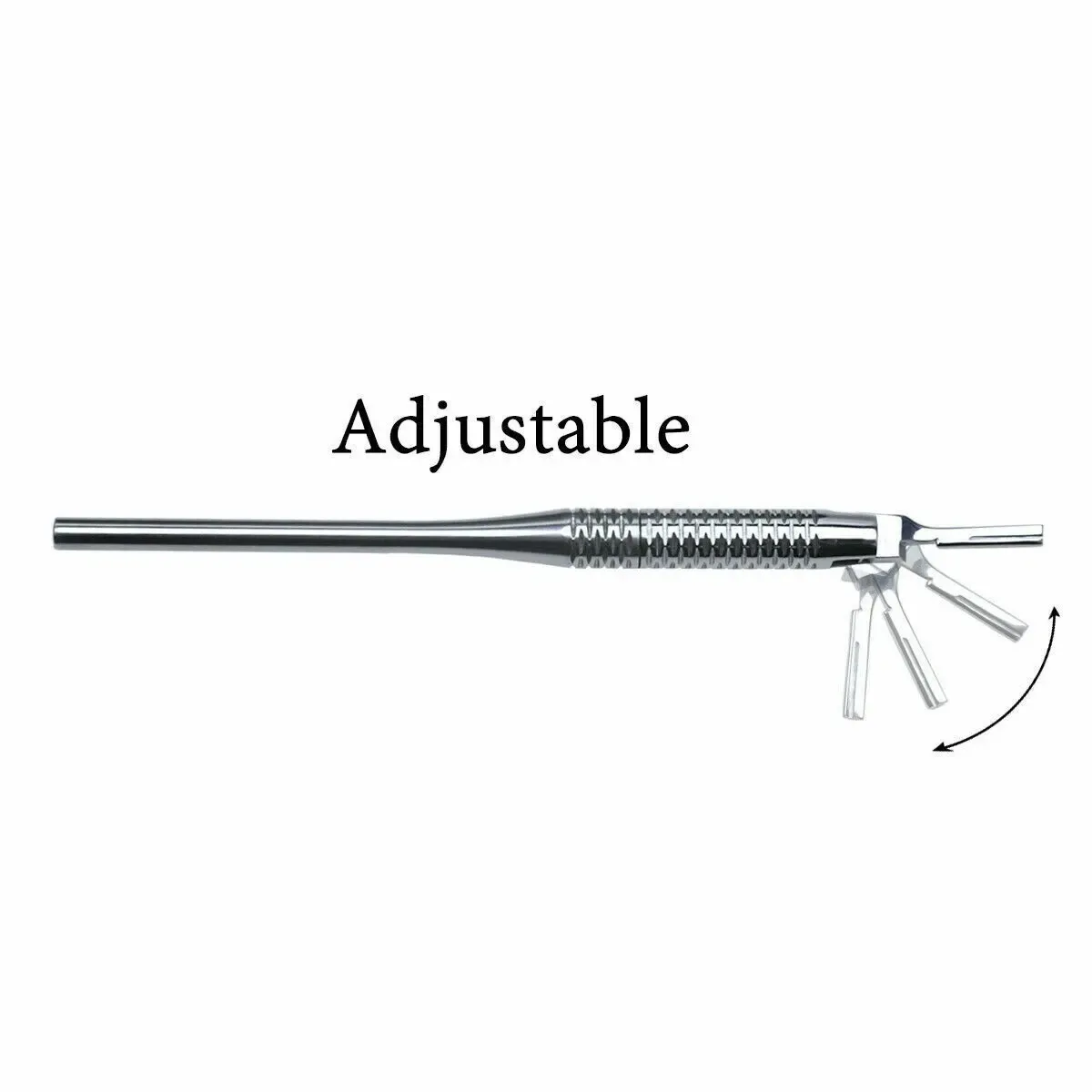
Round-grip dental scalpel handle with an inset showing its pivoting blade mount

Adjustable Dental Scalpel Handle

Round No. 3 dental scalpel handle with a rotating blade mount that adjusts through 180°, letting you set the blade angle for incisions that are awkward to reach with a fixed handle. Blades are sold separately.

Single piece $16.95
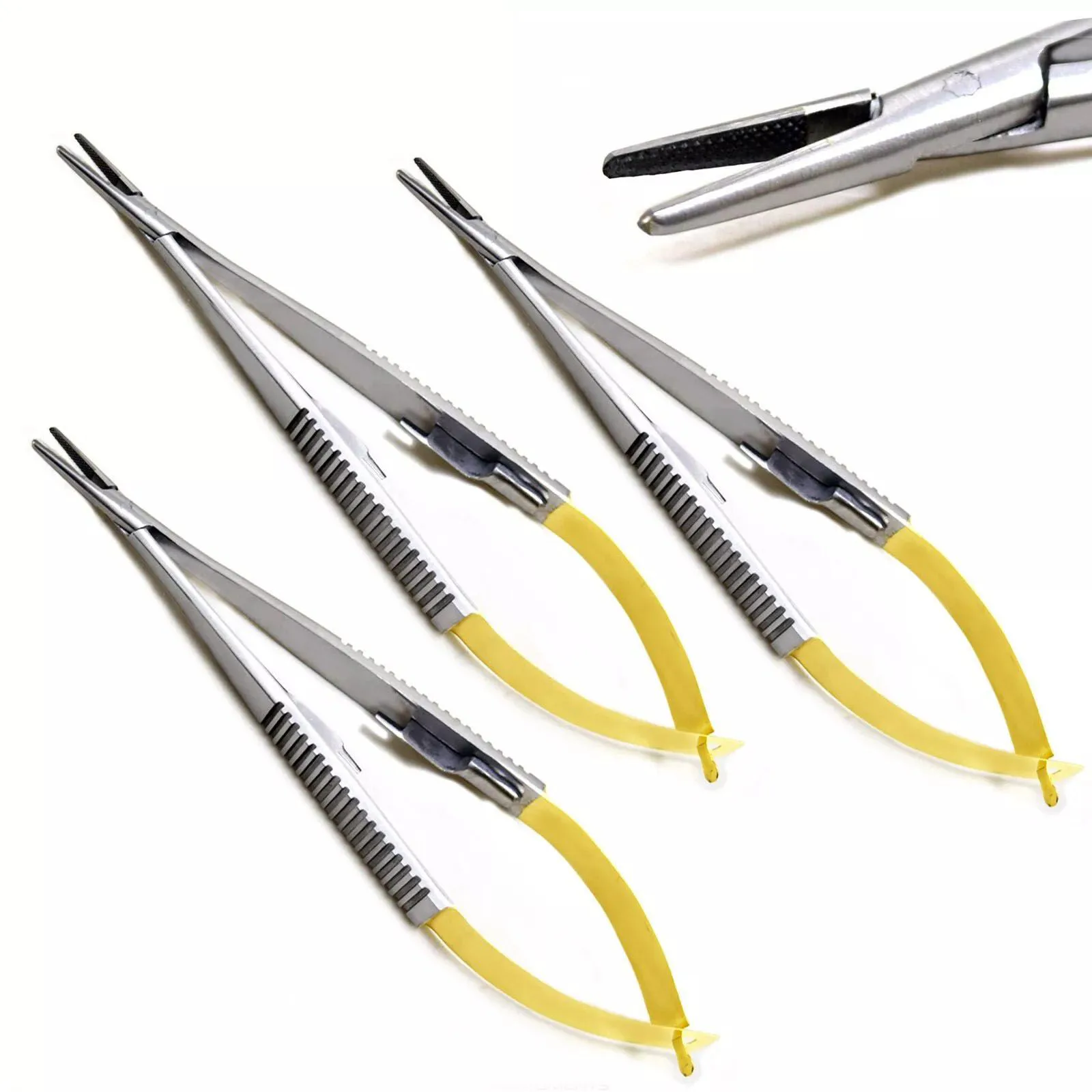
Straight Castroviejo needle holders with spring handles and a close-up of the fine jaws

Castroviejo Needle Holders

Castroviejo needle holder, 14 cm, with fine straight tungsten carbide jaws, spring handles and a locking catch for fine suturing. Order a single holder or a set; we confirm the set contents in your quotation.

Single piece $37.95
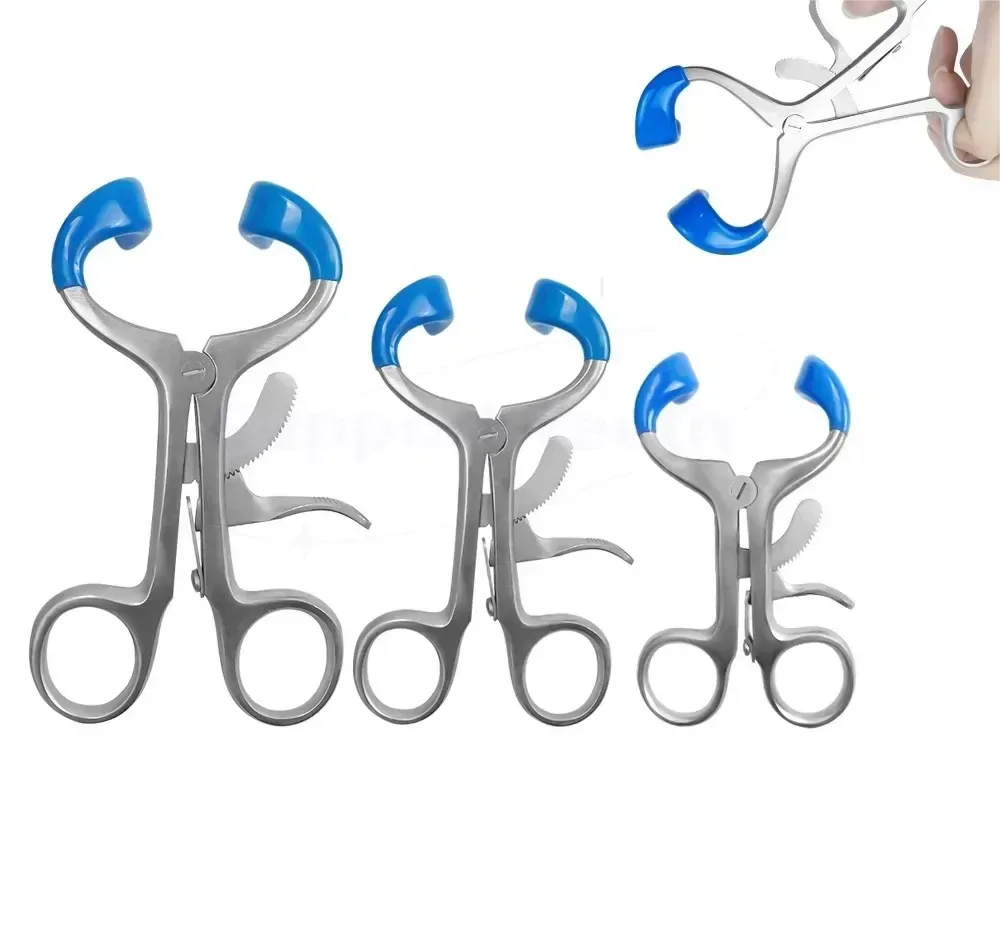
Padded Molt-style dental mouth gag in the size assortment — view 1

Dental Mouth Gags, Props and Retractors

Ratcheting Molt mouth gags in three sizes, 10, 12 and 14 cm long, with ring handles, a hinge, a ratchet that holds the selected opening and blue-covered contact ends.

36 catalogue references
Listed configuration $36.00
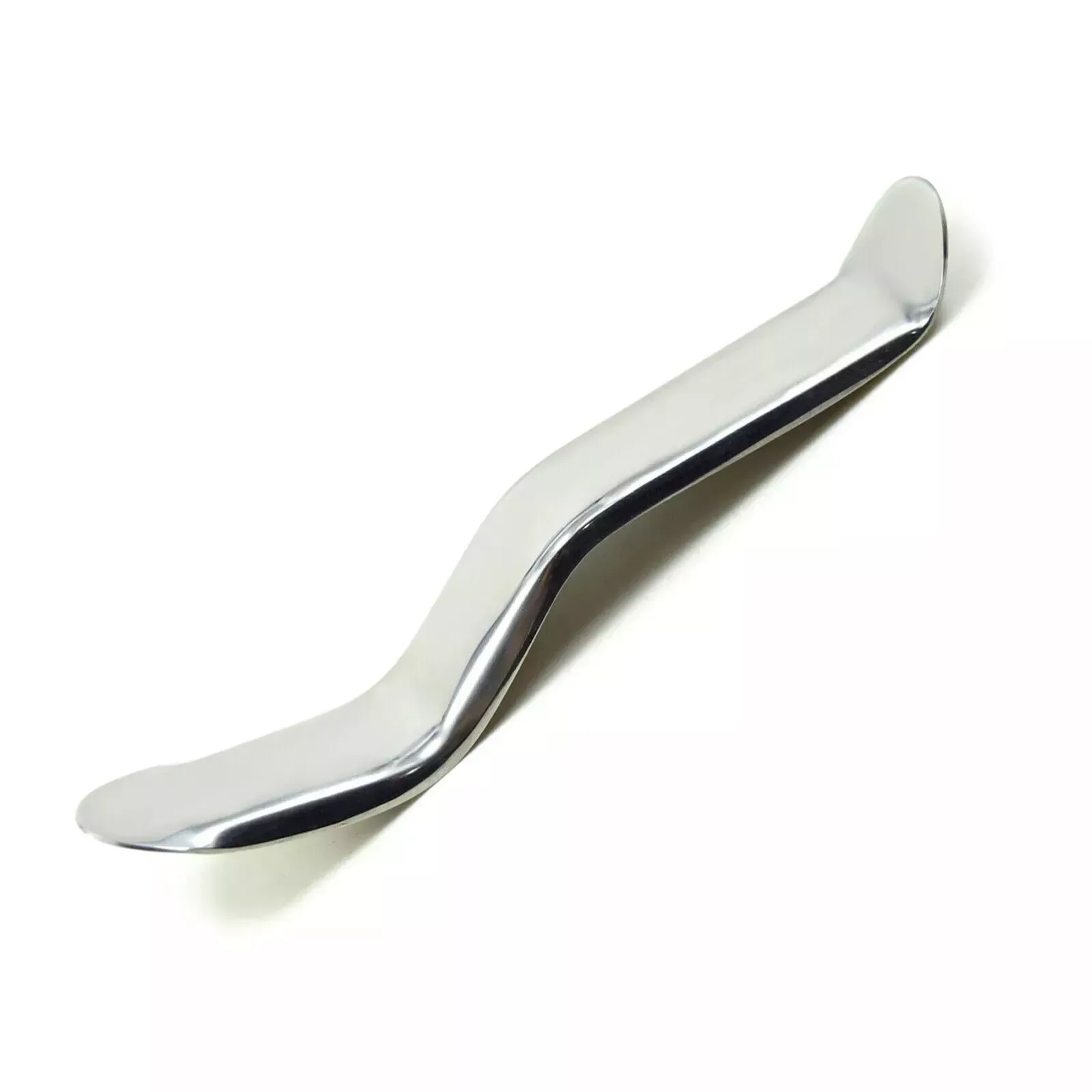
Minnesota retractor with broad curved working end and offset handle
Dental Surgical Retractors

Dental Surgical Retractor Patterns

Dental surgical retractors for holding soft tissue away from the working area, in Minnesota, Austin, Weider (Sweetheart), Langenbeck and Farabeuf patterns.

10 variations available
Request pricing
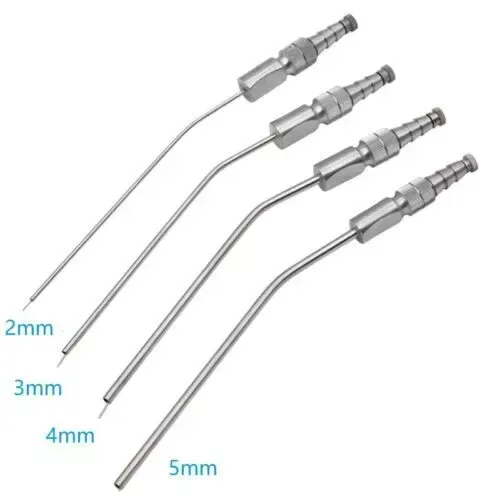
Four angled Frazier-pattern suction tubes labelled 2, 3, 4 and 5 mm in the supplied photo

Frazier Suction Tubes — Manual Aspirator Pattern

Angled Frazier suction tubes in 2, 3, 4 and 5 mm sizes for clearing blood and fluid from a small surgical site. They connect to your existing suction line; no pump or electrosurgical function is included.

Listed configuration $20.00
Mathieu needle holder with straight jaws, palm-squeeze handles and a ratchet catch

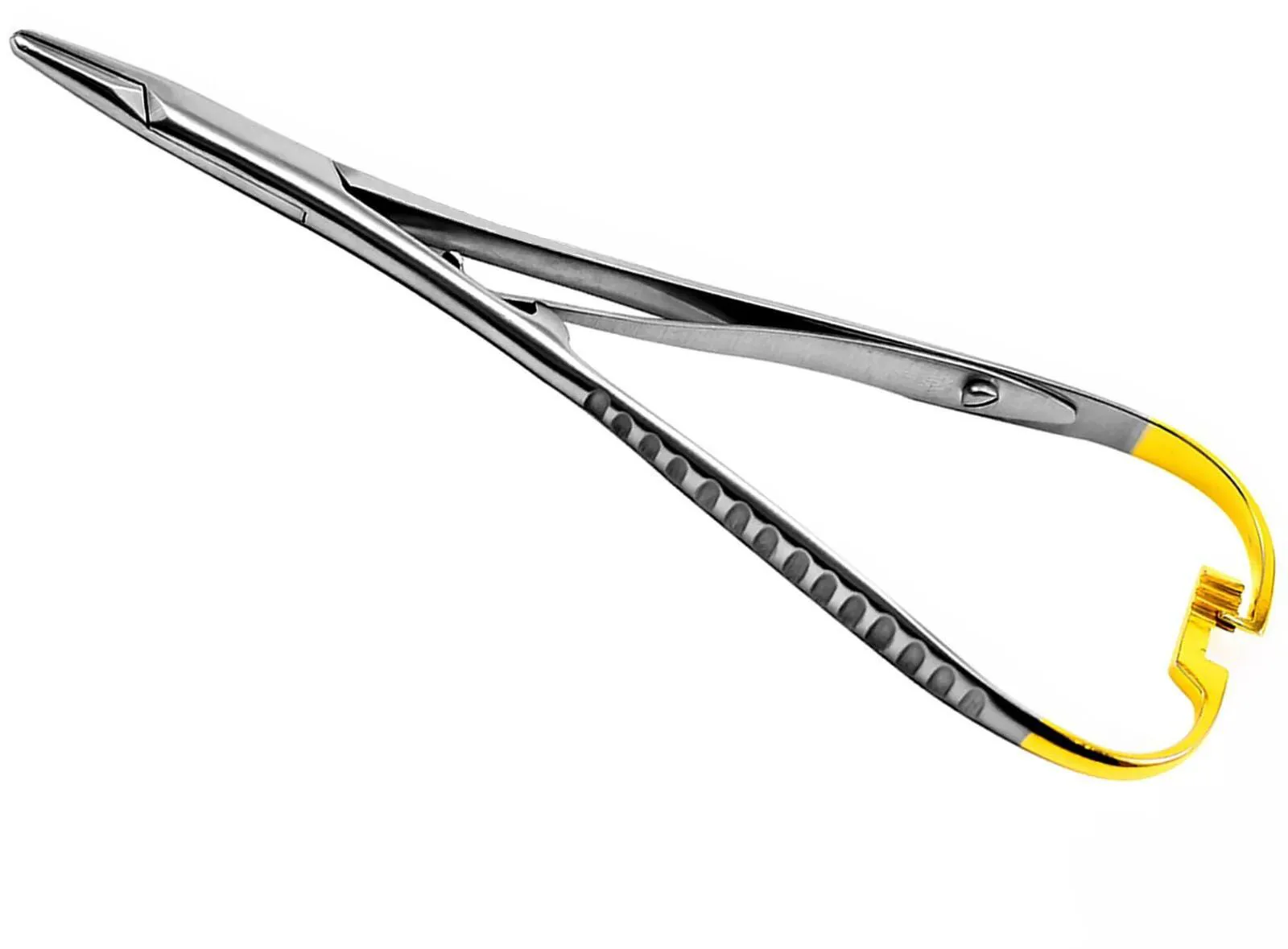
Mathieu Needle Holders

Mathieu needle holders with palm-squeeze spring handles, a ratchet catch and straight jaws, offered in 16–20 cm lengths. Tell us the length and quantity and we confirm the jaw details in your quotation.

Listed configuration $10.00
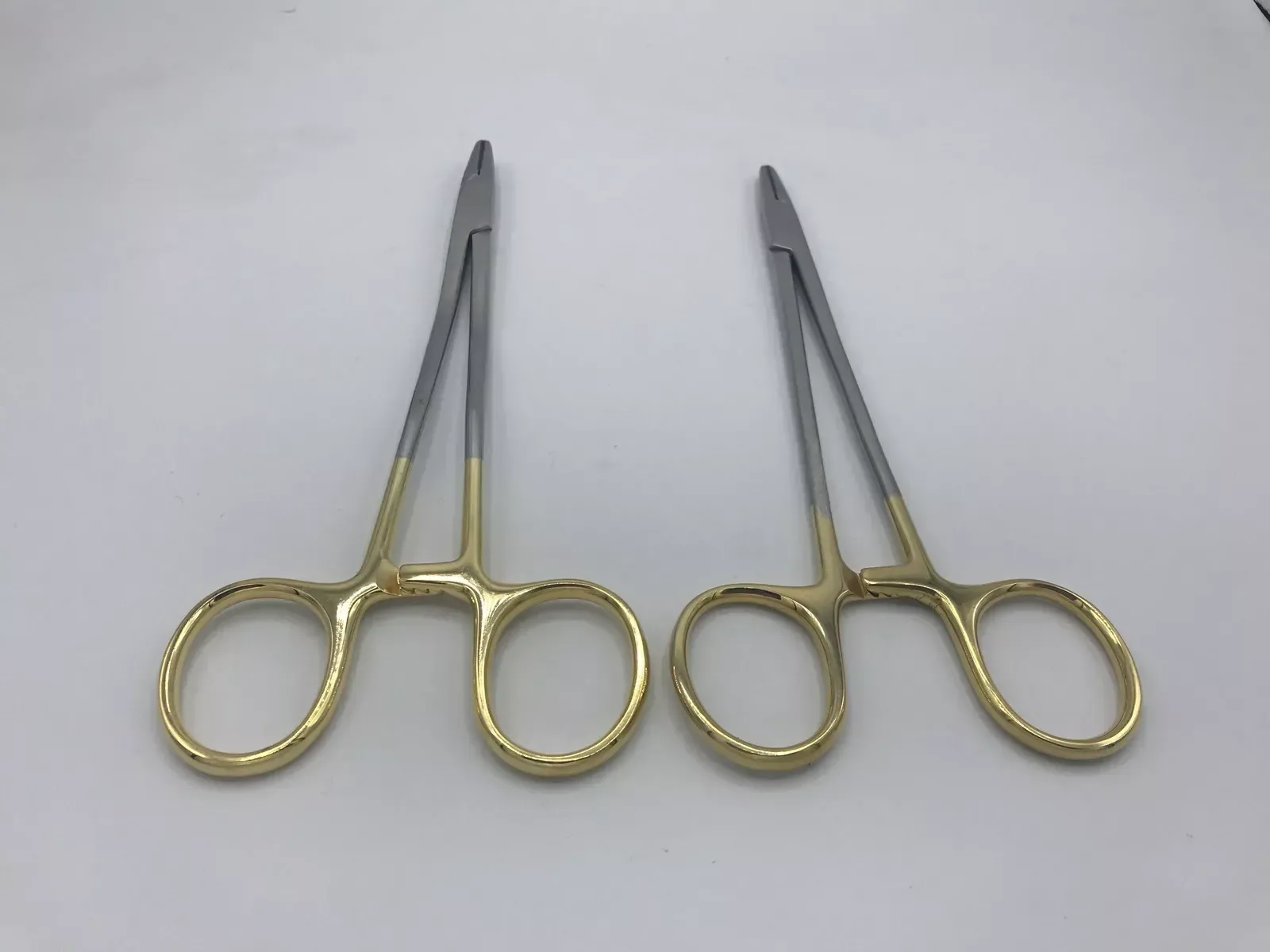
Straight and curved Mayo-Hegar needle-holder examples with gold-coloured rings — view 1

Mayo-Hegar Needle Holders

Mayo-Hegar needle holders are needle drivers for holding and guiding a suturing needle. Overall length, jaw profile, locking design and needle requirements help distinguish configurations.

39 variations available
Single piece $15.00–$20.00
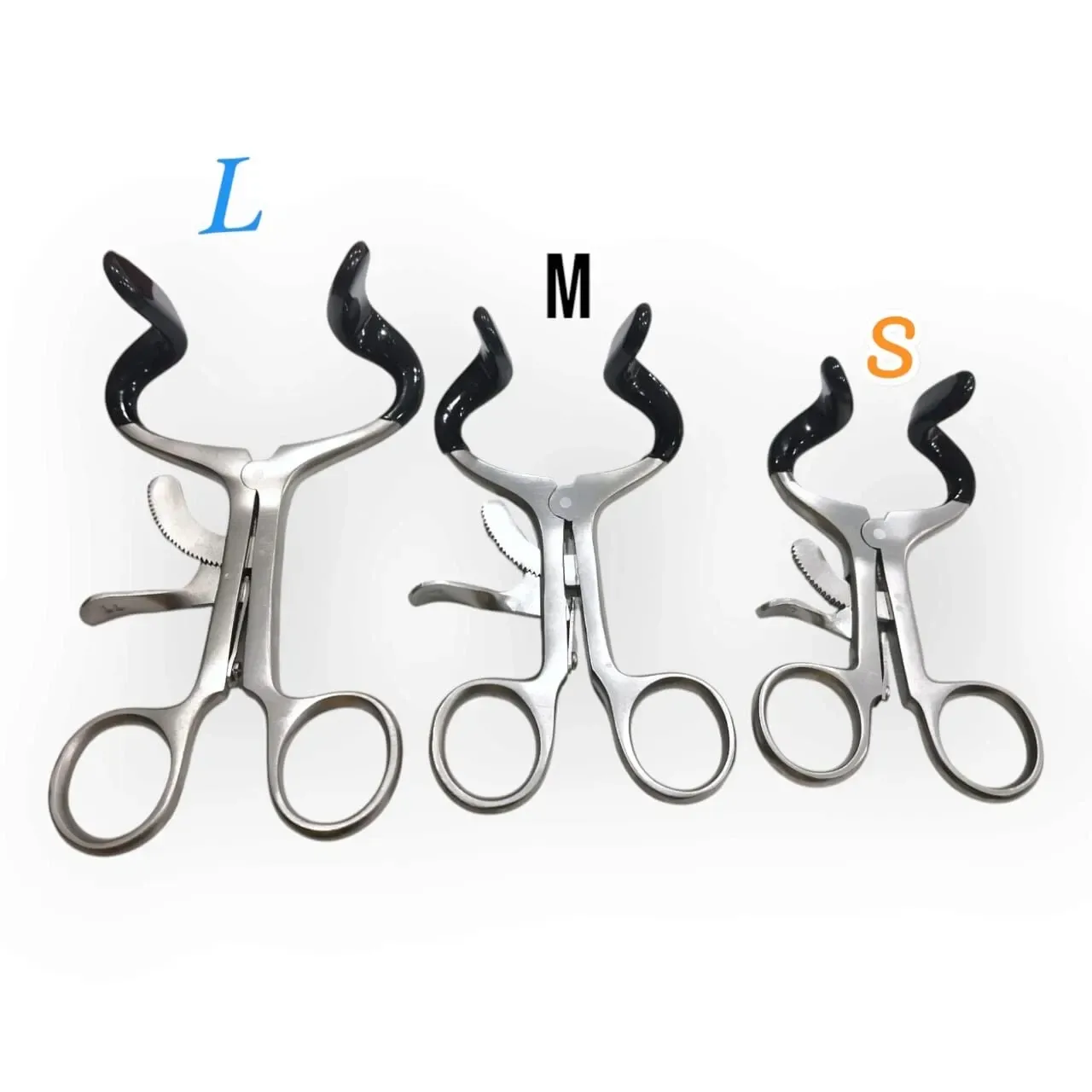
Three Molt-pattern mouth gags with covered contact ends, marked large, medium and small

Molt Mouth Gag Set (3 Pieces)

A set of three complete Molt mouth gags, one large, one medium and one small. Each has ring handles, a ratchet that holds the chosen position, and curved contact ends with black covers.

Request pricing
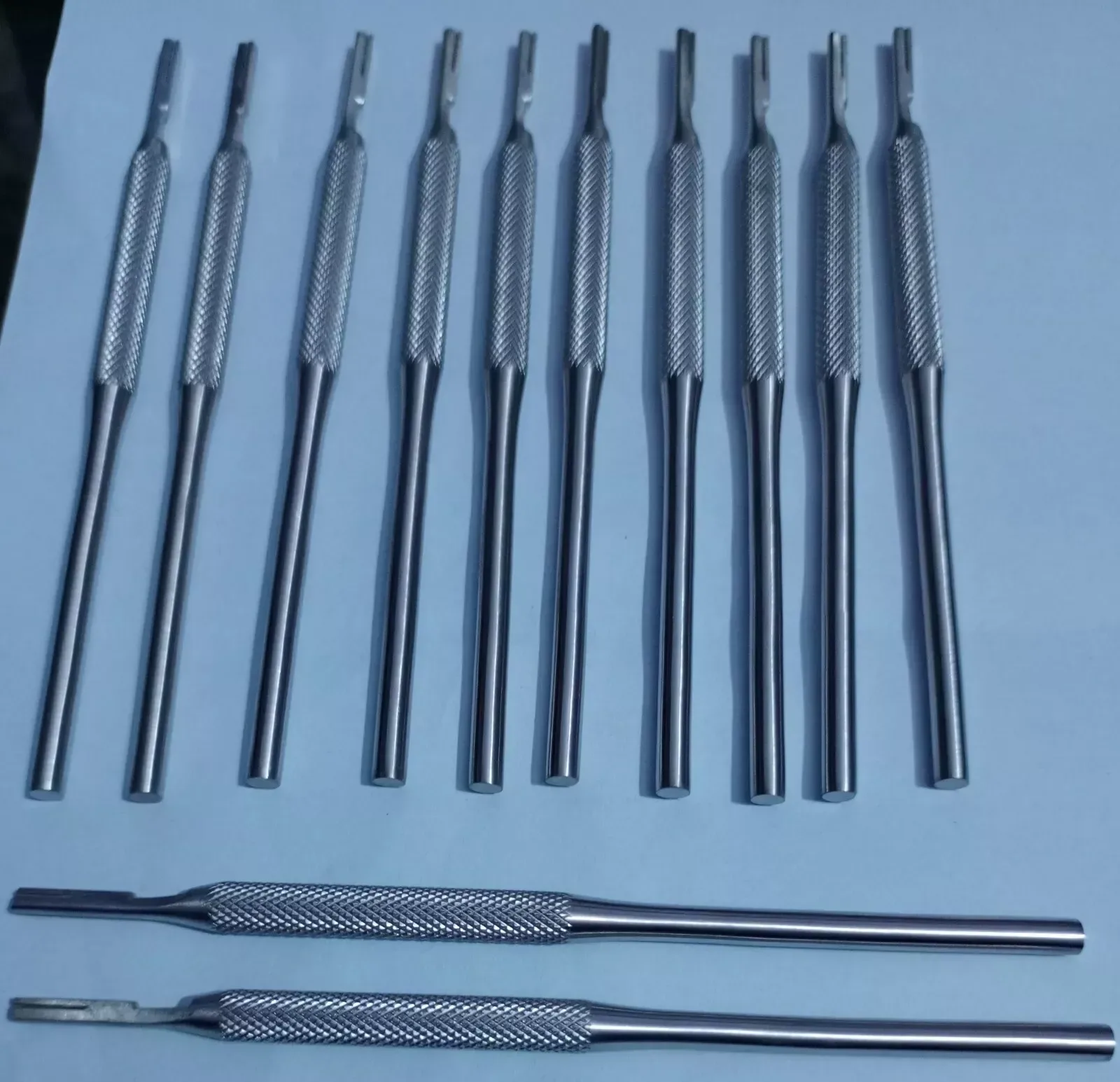
Round knurled dental scalpel handles without blades — view 1

Reusable Dental Scalpel Handles

Reusable dental scalpel handles in No. 3, No. 4, No. 5 round, No. 7 and microsurgical patterns, and a 12-piece set of round knurled handles. Choose the handle that fits your blades; blades are sold separately.

Stainless steel; grade confirmed for the selected product code
9 variations available
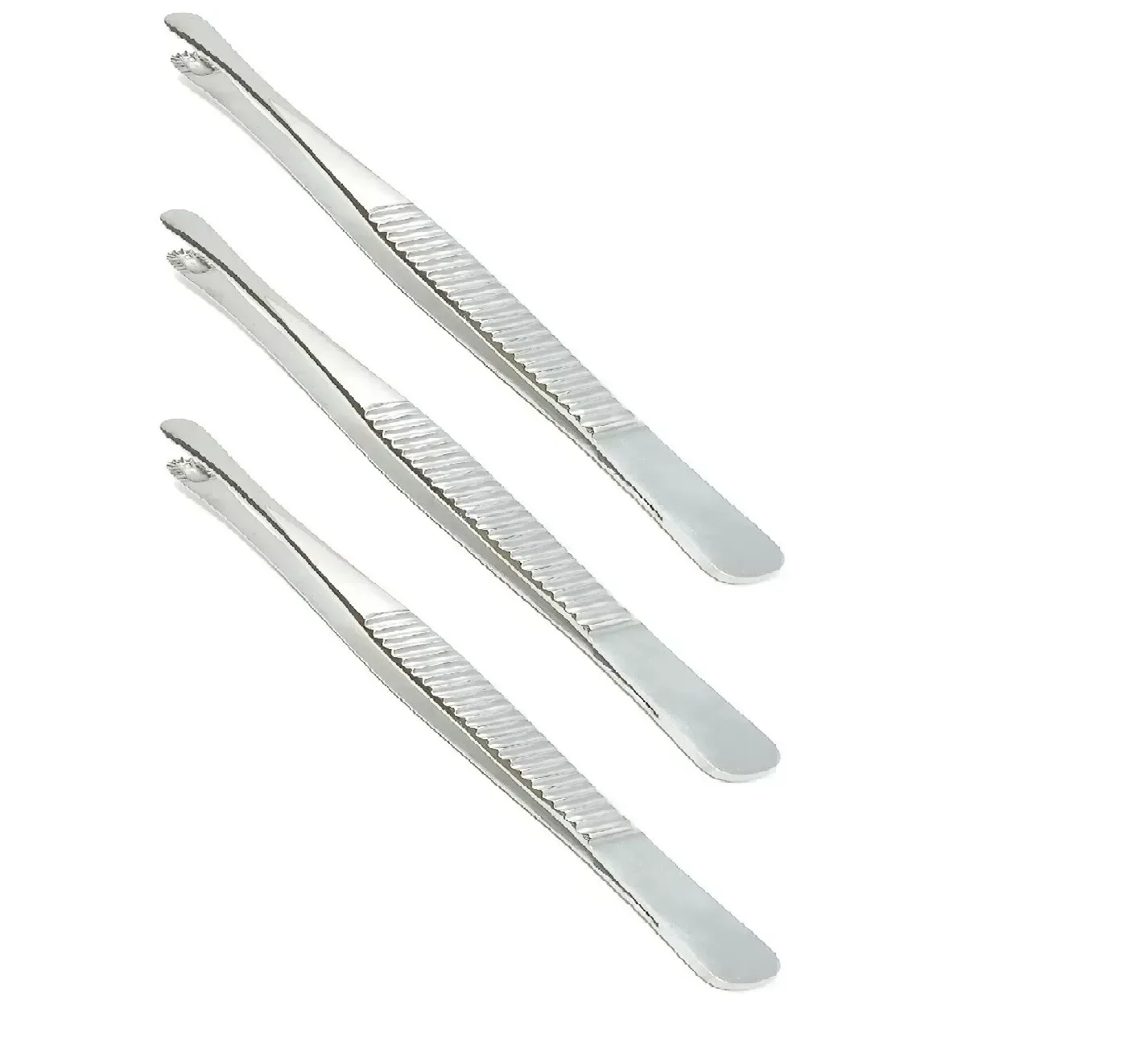
Russian-pattern thumb tissue forceps with rounded toothed gripping ends

Russian Tissue Forceps

Set of three Russian tissue forceps, about 6 inches long, with broad rounded toothed tips that hold tissue firmly during suturing and soft-tissue work. Tell us how many sets you need.

Browse Dental Surgical Instruments by Type
Narrow the range to the instrument family that matches the pattern or procedure you need.

Dental Surgical Instruments Buying Specifications

SpecificationDetails
Needle handlingCastroviejo (14 cm, fine straight tungsten carbide jaws, spring handles with locking catch); Mathieu (16–20 cm, palm-squeeze spring handles with ratchet); Mayo-Hegar (ring handles with ratchet, ordered by reference)
Tissue handlingRussian tissue forceps, set of three, about 6 inches (15 cm), broad rounded toothed tips
Access and retractionSurgical retractors in Minnesota, Austin, Weider (Sweetheart), Langenbeck and Farabeuf patterns; Molt mouth gags as single sizes or a three-piece set
Blade mountingReusable handles in No. 3, No. 4, No. 5 round, No. 7 and microsurgical patterns, a 12-piece round knurled set, and an adjustable No. 3 handle (blade mount rotates 180°); blades not included
SuctionFrazier suction tubes, angled, 2, 3, 4 and 5 mm; passive tubes that need a separate suction source
Bone instruments (by enquiry)Rongeurs, files and curettes by pattern, working end, size, and handle
Order formatIndividual instruments, defined surgical kits, cassette layouts, or private-label ranges

How to Choose Dental Surgical Instruments

Use Function to Navigate the Oral-Surgery Range

A surgical tray is easier to specify when instruments are grouped by what they do. The listed instruments cover five jobs: keeping the field open, holding the needle, holding tissue, mounting the blade, and clearing fluid. Each job has its own order fields, so start with the job and then match the pattern, length and interface.

This page covers dental and oral-surgery hand instruments. ENT, vascular, orthopedic, ophthalmic and hand-surgery products are outside it, even where they are also described as surgical.

  • Retraction and mouth opening — Five retractor patterns and Molt mouth gags, compared by working-end form, ratchet and size.
  • Needle handling — Castroviejo, Mathieu and Mayo-Hegar needle holders, compared by handle style, jaw and length.
  • Tissue handling — Russian tissue forceps, a thumb forceps with broad, rounded, toothed tips, supplied as a set of three.
  • Blade mounting — Reusable scalpel handles by handle number, and an adjustable No. 3 handle. Blades are separate.
  • Suction — Frazier suction tubes in 2, 3, 4 and 5 mm sizes. A separate suction source is needed.
  • Bone instruments (enquiry) — Rongeurs, files and curettes are quoted by pattern, working end and handle.

Needle Holders: Handle Style, Jaw and Length

Three needle holders are listed, and they differ in how they are held and how they lock. The Castroviejo is a 14 cm spring-handled holder with fine, straight tungsten carbide jaws; you hold it like a pen, and a catch on the handles keeps the jaws locked on a small needle. The Mathieu is held in the palm: squeezing its spring handles closes the jaws and engages a ratchet catch, and it is offered with straight jaws in lengths from 16 to 20 cm. The Mayo-Hegar is ring-handled, with the rings operating the jaws and a ratchet retaining closure.

Match a needle holder to the needle it must hold and the length your team uses, not to the pattern name alone. The Castroviejo is the usual choice for fine microsurgical needles, and a Mayo-Hegar or Mathieu may suit general closures with larger needles. The scissor-shaped rings of a Mayo-Hegar are only how it is held; a holder that also cuts suture is a different design and is specified separately. Jaw faces, inserts and jaw construction are confirmed in your quotation, so when you reorder, send the reference of the holder you used before, not just its length.

Retractors, Mouth Gags and Periosteal Elevators

The surgical retractor listing covers five named patterns. Minnesota has a broad, curved working end with an offset handle. Austin has a working end bent at a pronounced right angle. Weider, also called Sweetheart, has a broad, heart-shaped working end. Langenbeck has a bent retraction end whose profile and size vary between instruments, and Farabeuf is double-ended with an L-shaped working end at each end. Overall length is a different measurement from working-end width and depth, so for a replacement send the reference and the working-end dimensions that matter to you. A double-ended retractor is one instrument, a pair is two, and a set is an assembled group.

A Molt mouth gag does a different job: ring handles and a ratchet keep the jaws apart, rather than moving soft tissue aside. Molt gags are listed as single gags in three sizes, ordered by product code, and as a set of three complete gags, large, medium and small. Treat a size label as the size of the instrument, not the opening, because the ratchet sets the opening within each gag's range.

Periosteal elevators lift tissue away from bone and have their own page, where the Williger pattern is listed.

Scalpel Handles and Suction Tubes

A reusable scalpel handle holds a disposable blade, and the handle number tells you which blades it takes. The listing offers No. 3, No. 4, No. 5 round, No. 7 and microsurgical or mini handles, plus a 12-piece set of round knurled handles. The No. 3 and No. 7 take the smaller blades common in dentistry, such as No. 11, 12, 15 and 15C, and the No. 4 takes larger blades. The adjustable No. 3 handle has a blade mount that rotates through 180°, so you set the blade angle without changing your grip. Blades are sold separately on every handle, and the handle number and the blade number are different things: the first identifies the fitting, the second the blade shape.

Frazier suction tubes are slim, angled metal tubes in 2, 3, 4 and 5 mm sizes that connect to your own suction line. They are passive, so the pump, tubing and any electrosurgical cable are separate. We confirm in the quotation whether each size is the inside or the outside diameter, and the connector end and bore should be checked against your suction setup before you order in quantity.

Tissue Forceps and Bone Instruments

Russian tissue forceps are thumb forceps with broad, rounded, toothed tips, supplied as a set of three, each about 6 inches (15 cm) long. The rounded tip spreads the grip over a wider area than a pointed forceps and holds tissue firmly, while a finer tissue forceps suits delicate tissue better. They are not college tweezers, which place cotton and small items rather than hold tissue.

Bone rongeurs, files and curettes are enquiry items rather than listed products here, and they are three different instruments. A rongeur has opposed cutting jaws and a spring-action handle, a bone file has a textured filing surface, and a bone curette has a cup or spoon-shaped working end. For a rongeur, send the side- or end-cutting design, jaw profile, overall length, joint and spring. For a file, send the pattern, surface, ends, curvature and handle. For a curette, send the pattern, cup or spoon dimensions, single- or double-ended configuration and handle.

Individual Instruments and Defined Oral-Surgery Kits

Individual ordering suits replacements and specialist patterns. A surgical kit suits a repeatable procedure or a teaching setup when its exact contents are listed: the instrument names, patterns, quantities, handle choices, cassette and packaging. A piece count alone cannot tell you whether a set matches the workflow you need, so a set listed here, such as the three Molt gags, the three Russian forceps or the 12 round scalpel handles, is described by its own contents.

For a custom cassette, send the bill of materials and the sequence or position you want. We can review the range for current availability, sample needs, marking, private label, and packaging. Replacement lines should keep the same confirmed reference used in the original order.

Quality Evidence and Quote Requirements

Send the exact working end, overall length, handle, mechanism, material, finish, pack and quantity you need. For cutting and hinged instruments, the points to check on an approved sample include edge alignment, jaw contact, joint movement, spring return, ratchet engagement and surface finish. That sample and the order specification then serve as the reference for repeat production.

Our Sialkot manufacturing documentation, material evidence, quality controls, packaging, MOQ, private-label options, and export information can be included with the commercial discussion. Cleaning, lubrication where permitted, packaging, and sterilization should follow the product instructions and the healthcare facility protocol.

Dental Surgical Instruments FAQ

Which surgical instruments are currently listed?

Needle holders (Castroviejo, Mathieu and Mayo-Hegar), surgical retractors in five patterns, Molt mouth gags as single sizes and as a three-piece set, reusable and adjustable scalpel handles, Frazier suction tubes in 2, 3, 4 and 5 mm, and Russian tissue forceps. Bone rongeurs, files and curettes are quoted by enquiry: send the pattern, working end and handle you need.

How should a dental surgical range be divided for purchasing?

Separate tissue handling, retraction, cutting, suturing and bone-instrument requirements. Each group uses different comparison fields: forceps tips, retractor blades, scissors or scalpel interfaces, needle-holder jaws, and bone-tool working ends. Build a set from those individually identified lines rather than using oral surgery kit as the entire specification.

How do a bone rongeur, file and curette differ as order items?

A rongeur is identified by opposed cutting jaws and its action; a bone file by its filing surface; a curette by its scraping working end. Compare their own pattern and dimensions rather than transferring a file size to a curette or treating all bone instruments as a single range.

Where should I compare tissue-reflection instruments and retractors?

Use Periosteal Elevators for named tissue-reflection patterns and Surgical Retractors for retraction patterns. Some listings carry a dual description, so keep the exact reference on your list to avoid counting the same instrument twice. A full surgical set should still identify each required instrument and quantity separately.

How do spring-handled and ring-handled needle holders differ?

A spring-handled holder, such as the Castroviejo or the palm-held Mathieu, closes the jaws when the handles are squeezed and a catch or ratchet holds them on the needle. A ring-handled Mayo-Hegar is operated through the finger rings, with a ratchet retaining closure. Choose by the grip your team uses and the needle sizes the jaws must hold; the Castroviejo is the usual choice for fine microsurgical needles.

Why should a scalpel handle and blade be specified separately?

The handle and blade meet through a defined attachment, and blade references are not interchangeable solely because they are called surgical blades. Identify the selected handle and the blade family it accepts. Also distinguish the reusable handle from the blade's own supply designation; one component's labeling does not establish the other's status.

What should I send with a reference or product code?

Send the code together with the pattern name, the length or size, the jaw profile or working end, and the quantity, so the quotation names the exact instrument. A code, a pattern name or a piece count alone does not show which length, jaw or contents you expect, and we confirm the written specification of the quoted instrument before you order.

Does a Frazier suction tube come with a suction source?

No. The tube is passive: it connects to your own suction line, and the pump, tubing and any electrosurgical cable are separate. Check the connector end against your tubing, and note that we confirm in the quotation whether each size, 2, 3, 4 or 5 mm, is the inside or the outside diameter.

What should I check before accepting a mixed oral-surgery kit?

Review every instrument name, figure, quantity and configuration, including scissors points, needle-holder jaw form and any side-specific components. Compare the instrument schedule with the clinical list, then check container layout and separately listed accessories. A kit's total piece count does not show which patterns are present or whether a required interface matches.

Need Surgical Instruments in Bulk?

Send your instrument list and quantities for manufacturer-direct pricing, custom branding, or mixed-category quotes.

WhatsApp