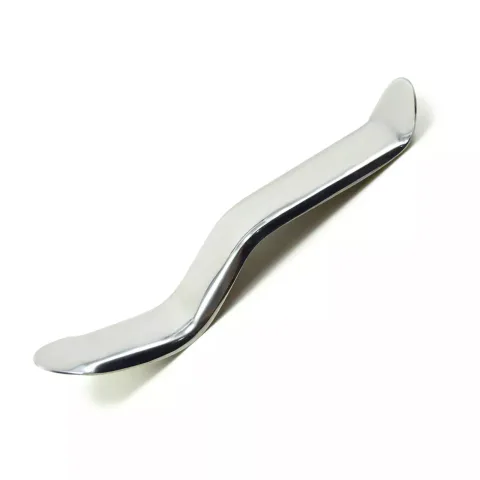
About Dental Surgical Retractor Patterns
Surgical retractors hold soft tissue, such as the cheek, lip or tongue, away from the working area so it stays clear during dental and oral surgery. We supply them in five named patterns: Minnesota, Austin, Weider (also called Sweetheart), Langenbeck and Farabeuf. Each pattern has a different working-end form, and that form is what you choose by.
The five patterns
- Minnesota: a broad, curved working end with an offset handle.
- Austin: a working end bent at a pronounced right angle. The name describes the form, not one fixed size.
- Weider (Sweetheart): a broad, heart-shaped working end, associated with cheek and tongue retraction. Sweetheart is another name for the same pattern.
- Langenbeck: a bent retraction end. The profile and working-end size vary between instruments, including flat and rounded forms.
- Farabeuf: a double-ended retractor with an L-shaped working end at each end.
Length and working-end size are different details
Overall length is the size of the whole instrument. The working end has its own dimensions: width, and the depth, height or length of the blade, depending on how the maker labels it. Two retractors of the same pattern and overall length can have different working ends, so the pattern name and length alone are not enough for an exact replacement. On a double-ended retractor such as the Farabeuf, both ends matter.
Double-ended, pairs and sets
- Double-ended: one instrument with two working ends.
- Pair: two instruments.
- Set: an assembled group of instruments.
The five pattern names identify the range; the list of names does not specify the contents of a kit.
Requesting a quote
Request a quote with the pattern and quantity you need. If you are replacing a retractor, include its reference and the working-end dimensions that matter to you. If you need to hold the mouth open rather than retract soft tissue, that is a different instrument; see our mouth gags and retractors.