
Dental Cassettes and Instrument Trays Products

1 product
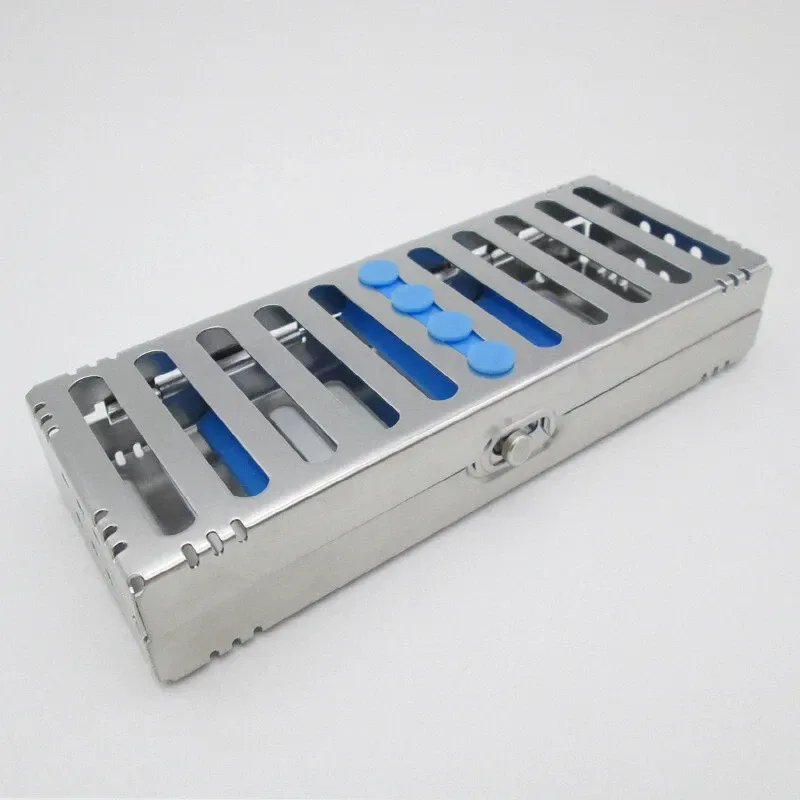
Closed five-position dental instrument cassette with blue retention rails, angled view

Sterilization Cassette 5-Slot

A dental instrument cassette with five holding positions, a slotted metal body and lid, blue internal holding components and closure hardware. Sold as one cassette; instruments are not included.

Single piece $25.95

Dental Cassettes and Instrument Trays Buying Specifications
SpecificationDetails
Listed cassetteSterilization Cassette 5-Slot: one cassette, five instrument positions, slotted metal body and lid, blue internal holding components, closure hardware; supplied empty
Cassette selectionSlot capacity, external and internal dimensions, perforation, closure, rails or mat, and instrument retention
Tray selectionLength, width, depth, perforated or solid construction, rim, handle or cover where present
WorkflowInstrument retention and protection (cassette) versus open procedure organization (tray)
CompatibilityMaterial and processing methods stated in the exact product instructions
Order detailsProduct or capacity, dimensions, quantity, marking, packaging and destination

How to Choose Dental Cassettes and Instrument Trays

Choose a Cassette for Retention or a Tray for Open Organization

A cassette and an instrument tray may sit side by side in a sterilization area, but they solve different problems. A cassette uses slots, rails or another retention system to keep each instrument in place and protected through handling and processing. An open tray gives you a surface or container for arranging a procedure setup. Decide which workflow you are equipping before you compare dimensions.

The five-slot cassette is the model currently listed here. Five slots describe the positions inside one cassette, so it is not a pack of five cassettes and it does not come with five instruments. Cassettes of other capacities and open trays are not listed as ready-to-order products; send the target dimensions, the instrument count and the retention method you need, and we quote them.

Measure the Instruments and the Equipment Space

Capacity labels describe the intended number of instrument positions, but overall and usable internal dimensions still matter. Long or bulky instruments may not fit a cassette simply because the slot count is sufficient. Record the longest instrument, handle diameter, required spacing, and any hinged product that needs additional room.

Also check the available space in washers, ultrasonic units, packaging, and sterilizers. Processing compatibility depends on the exact material, dimensions, product instructions, and equipment process; it is not universal across every stainless-steel tray and chemical or cycle.

Compare Perforation, Closure, and Retention

Perforation affects fluid or steam access and drainage, but the design must be evaluated with the complete processing workflow. A cassette closure should hold securely while remaining operable after repeated use. Rails, mats, or slot systems should retain instruments without hiding damage or preventing inspection. Open trays need smooth, cleanable surfaces and stable edges.

For a cassette, review open and closed views, retention points, perforations, the latch, and a dimensioned layout of your own instruments so fit is not judged from a photograph alone. For a tray, review the depth and edge profile.

Pair Cassettes with Defined Instrument Sets

A cassette can be quoted with a diagnostic, periodontal, surgical, orthodontic, or student set when the selected instruments fit its positions and dimensions. Send the full instrument list and preferred layout rather than requesting a generic cassette for a kit. We can then review the arrangement and packaging requirements together.

For replacements, retain the cassette product reference, dimensions, capacity, and any rail or mat specification. Private-label needs may include etched or printed marking, outer labels, barcode, instructions, and pack quantity. State each requirement before sample approval.

Processing Evidence and Quote Details

For a quotation, send the product or capacity you want, external and internal dimensions, perforation, closure, retention component, quantity, marking, packaging and destination. If a particular washer, ultrasonic unit, pouch or sterilizer space must be accommodated, include those dimensional limits.

When instruments are bought with the cassette, add the longest instrument, widest handle, number of hinged instruments, the spacing you want and a numbered layout, so we can check that the capacity reflects usable positions. A tray enquiry should instead state the working area, edge form, depth and equipment-space limits.

Manufacturer, material, packaging, and certificate evidence can be supplied with the quotation where relevant. Cleaning and sterilization follow the exact product instructions, your equipment guidance and your facility protocol, not the name or appearance of the cassette.

Keep one approved layout for each cassette-and-instrument combination, and agree which dimensions, closure action and retention features are checked on receipt, so later batches are compared against the same reference. If the instrument composition changes, ask for a fit review before a repeat order, and quote each capacity you need as its own configuration.

Dental Cassettes and Instrument Trays FAQ

How does an instrument cassette differ from an open tray?

A cassette provides a defined arrangement for retaining instruments during handling and an applicable processing workflow. An open tray provides an area for organizing instruments. Compare retention and closure when selecting a cassette, and usable area and depth for a tray. The processing instructions for the selected product remain a separate check.

Does the five-slot cassette come with instruments?

No. The five-slot cassette is supplied empty, and five slots describe the positions inside one cassette, not five included instruments or a pack of five cassettes. Instruments are a separate order, and we can quote them with the cassette when you send the instrument list.

Does a five-position cassette fit any five instruments?

No. Position count is only one fit criterion. Compare usable internal dimensions, the longest instrument, handle widths, spacing and room for hinged instruments; a layout of the actual selected instruments is more useful than a total count. Also check the closed cassette's dimensions against your equipment and packaging space.

Which cassette features should I compare after checking dimensions?

Compare the retention arrangement, closure, perforations and access for inspecting the contents. Check whether the specified instruments remain in their intended positions and whether the latch and internal supports suit that layout. Any replaceable support or mat needs its own reference; external size alone does not identify a matching cassette.

Does a cassette make its contents sterile without a separate process?

No. A cassette organizes instruments; it does not perform sterilization. The instrument, cassette and equipment instructions govern the processing and packaging arrangement, so evaluate them together with your facility's workflow before choosing a container. No single cleaning or sterilization cycle can be inferred from a cassette's name or appearance.

How should a cassette be specified with a new instrument kit?

Attach the itemized instrument list and a numbered layout, including long or hinged instruments and any separate accessories. Record the cassette's usable dimensions and retention requirements against that layout. Keep the approved combination with the order so adding a new instrument later triggers a fit check rather than relying on the original piece count.

Need Dental Cassettes & Trays in Bulk?

Send your instrument list and quantities for manufacturer-direct pricing, custom branding, or mixed-category quotes.

WhatsApp