
Dental Elevators
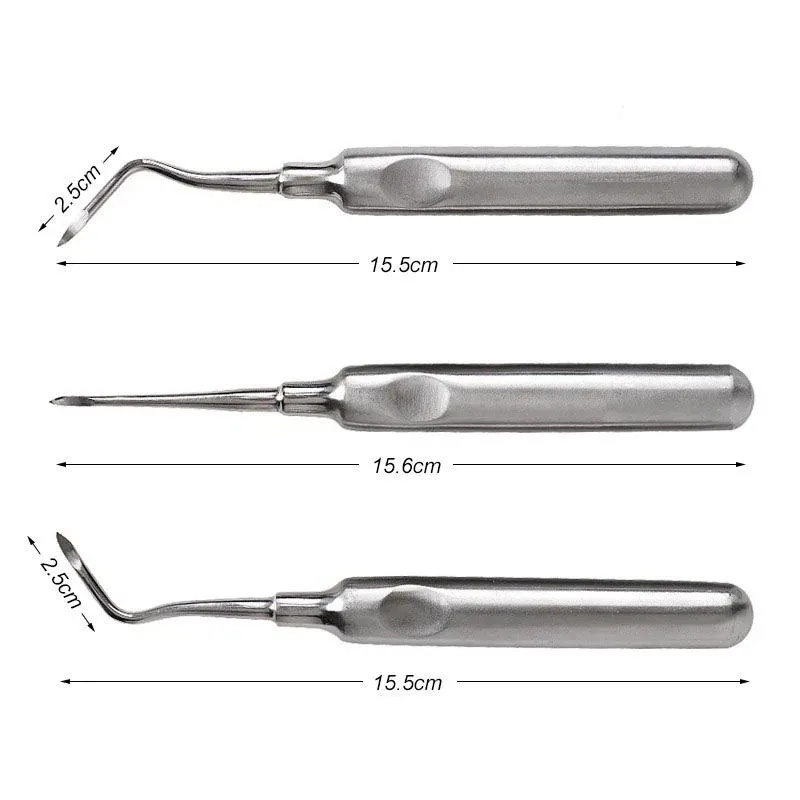
Dental Root Tip Pick Patterns
Dental root tip picks with fine working ends for retrieving loose root tips and fragments after extraction. Patterns include straight, left/right angled, West, Howard and apical picks.
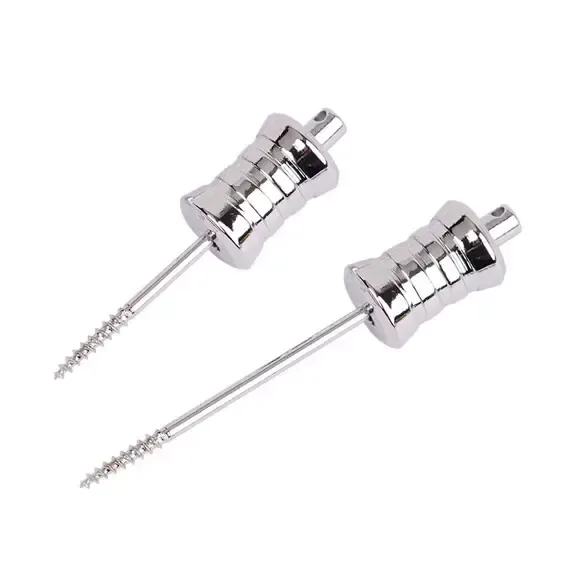
Manual Root Fragment Extractor Set (2 Pcs)
A pair of manual root-fragment extractors, one short and one long. Each is a complete hand instrument with a pointed threaded tip, a smooth shaft and its own grooved finger grip.
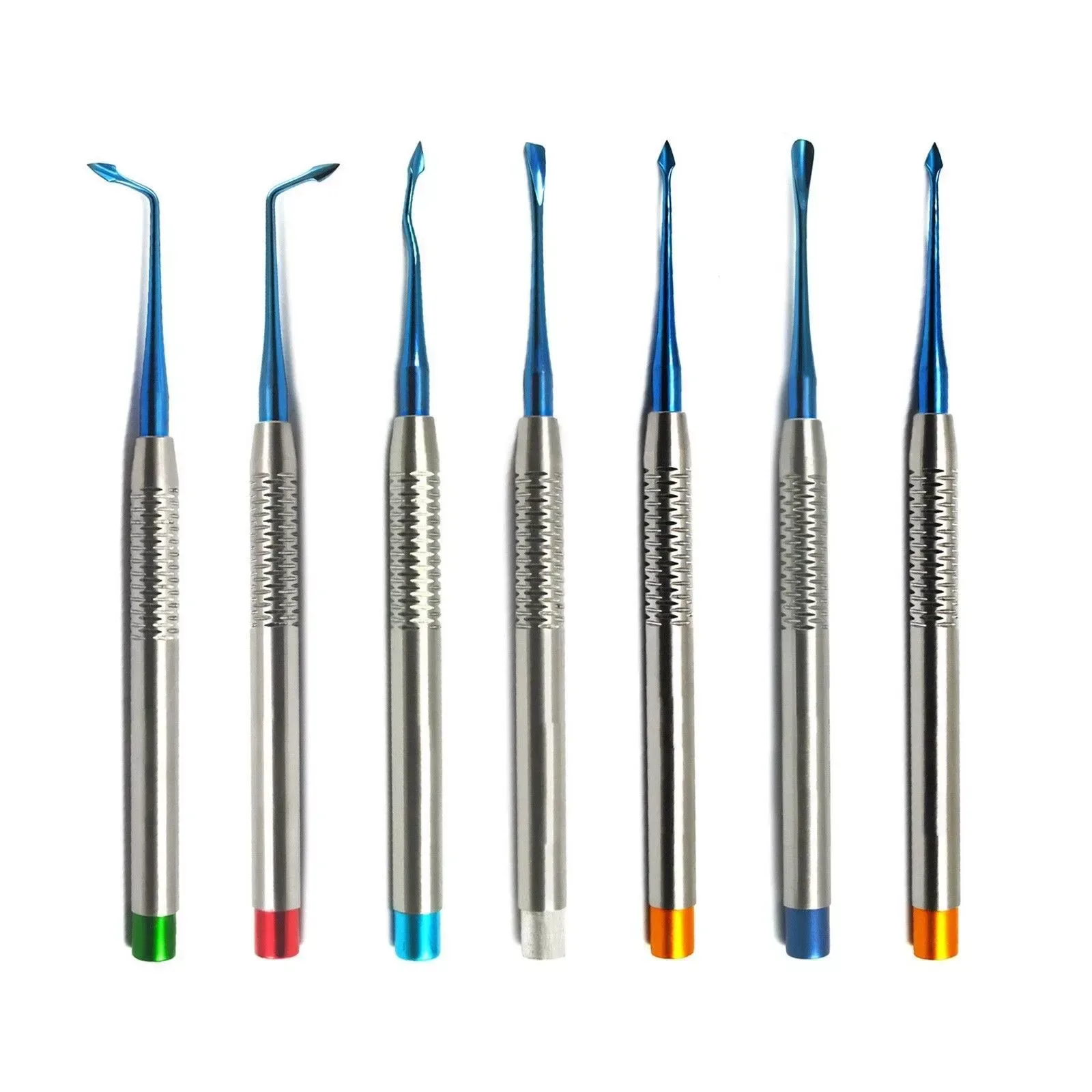
PDL Luxating Elevator Set, 7 Pieces
Set of seven single-ended PDL luxating elevators with thin blue tips in straight and angled profiles, colour-coded handle ends and a matching metal cassette. For cutting the ligament and loosening teeth gently.
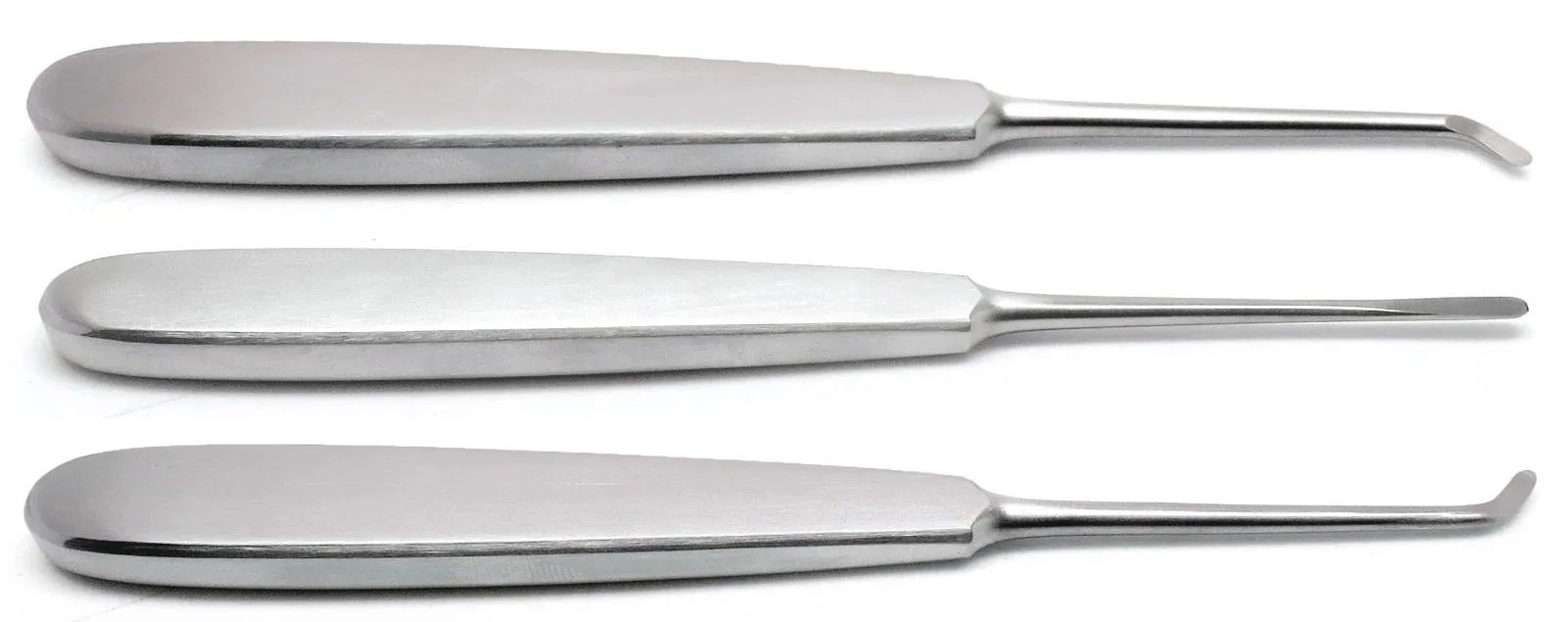
Root Elevators
Warwick James root elevators for loosening teeth and roots in extraction work, in a straight form and two opposed angled forms, with flat elongated handles and rounded working ends.
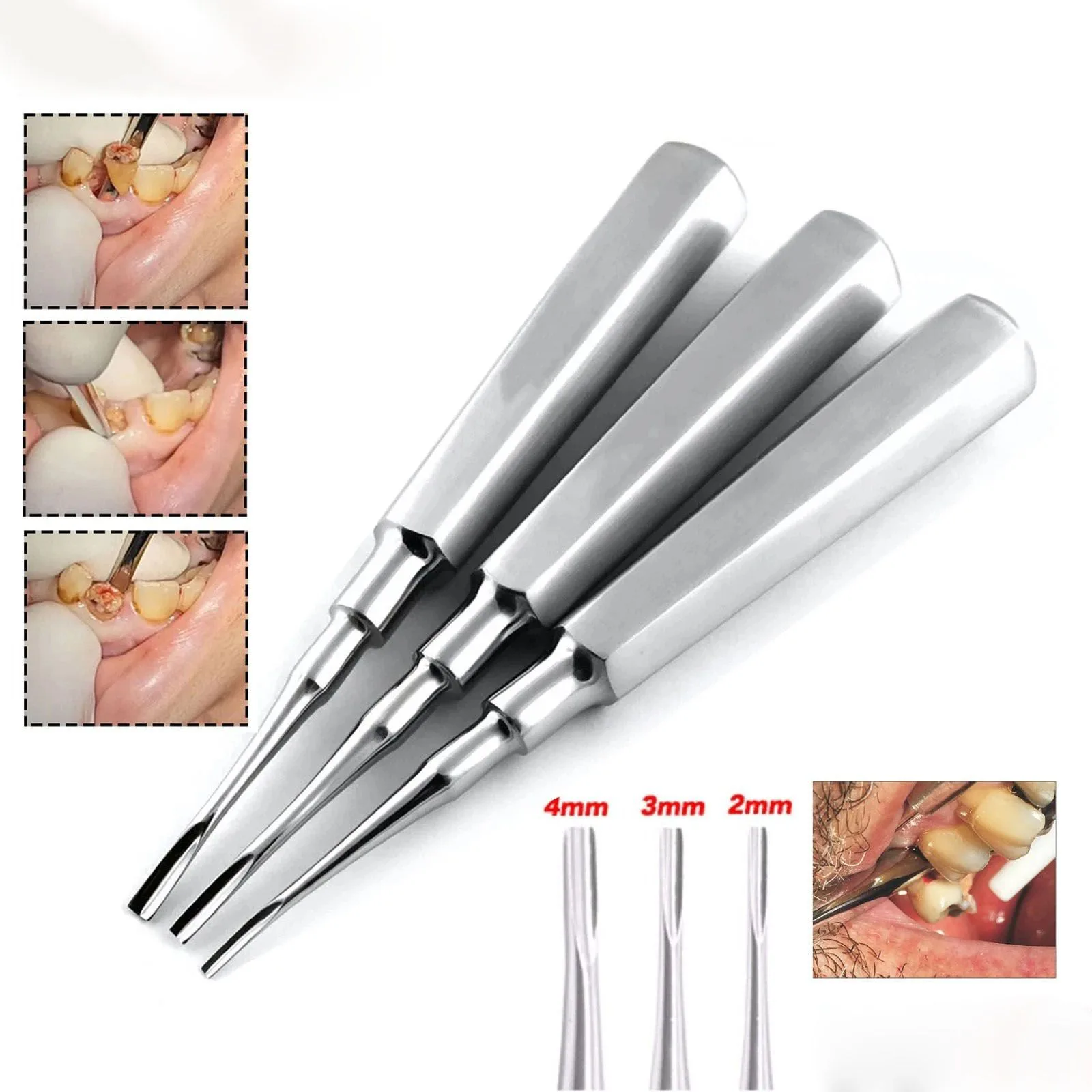
Straight Dental Elevators
Straight dental elevators for loosening teeth before extraction, in Coupland, Bein, Flohr, London Hospital and 301-style patterns, sold singly or as graduated sets of increasing blade width.
Dental Elevators Buying Specifications
| Specification | Details |
|---|---|
| Listed groups | Straight elevator patterns; Warwick James root elevators; PDL luxating elevator set (7 instruments plus cassette); root tip pick patterns; manual root fragment extractor set (2 instruments) |
| Working end | Blade or tip width, thickness, curvature, side, and shank angle |
| Orientation | Straight, left, right, or paired, depending on the pattern |
| Handle | Pattern, diameter, texture, overall length, material, and finish |
| Order format | Individual references, left and right pairs, the listed sets, or buyer-defined assortments |
Dental Elevators FAQ
What should I check when comparing straight and Cryer elevator references?
Keep the named pattern, full reference, working-end views, blade width and shank configuration together. Makers list straight-tip elevator ranges separately from Cryer ranges, which have several model references and tip sizes. Record any left or right designation for the reference you select; the family name alone does not identify an equivalent replacement.
How does a root tip pick differ from a straight elevator?
A straight elevator has a straight shank and a flat, slightly concave blade for loosening a tooth, while a root tip pick has a fine pick or elevator-style end for retrieving a loose root tip or fragment. Choose by the job and the working-end form, and note that makers sometimes sell the same fine instrument as a pick or as a root tip elevator.
Are dental root elevators and periosteal elevators the same family?
No. Root elevators belong to the extraction instrument range, while periosteal elevators are tissue-reflection instruments with their own surgical collection. A surgical assortment may contain both, so put the full family name on each order line, so an ambiguous request for an elevator does not bring the wrong instrument.
Are luxating instruments, elevators and periotomes interchangeable labels?
No. Use the full product identity and the documented working-end design: the terms can overlap in listings, but blade thickness, width, bevel, shank and stated purpose can differ. A product name containing luxating does not show that it is the same design as an existing periotome or elevator.
Why do some elevator orders need a left and a right reference?
Because an angled or side-specific working end makes orientation part of the instrument's identity. List the left and right references separately, with a quantity for each complete instrument. A photograph of two instruments or a family title does not establish a paired sales unit; the selected configuration and its contents schedule identify what is ordered.
How do the listed elevator sets differ from single instruments?
The seven-piece PDL luxating set is seven single-ended instruments plus a matching metal cassette, the extractor set is two complete instruments (one short, one long), and a graduated straight set gives narrow, medium and broad blades with the widths confirmed in your quotation. Single patterns suit replacement. When you compare a set with a single instrument, count complete instruments and count a cassette separately.
Which measurements matter more than overall elevator length?
Start with the blade or tip width, thickness, curvature and shank angle. Add overall length and handle details after the working end is identified. Two elevators of similar length can have different working geometry, so a replacement comparison should include measured face and side views rather than length alone.
Need Dental Elevators in Bulk?
Send your instrument list and quantities for manufacturer-direct pricing, custom branding, or mixed-category quotes.