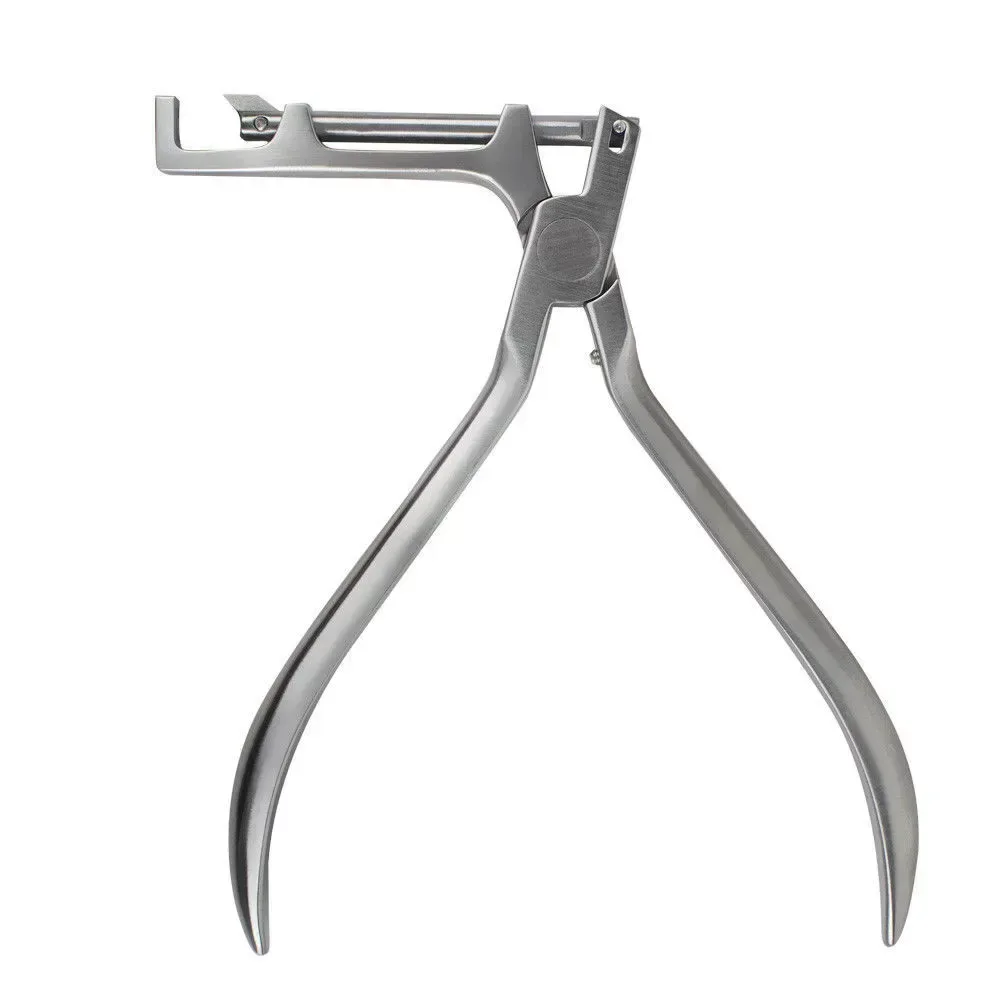
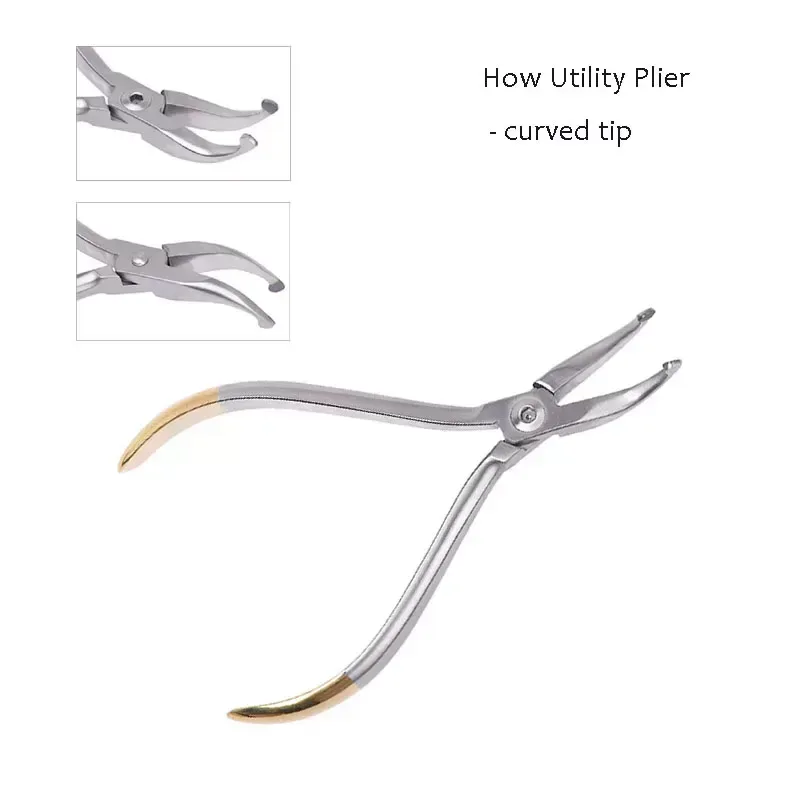
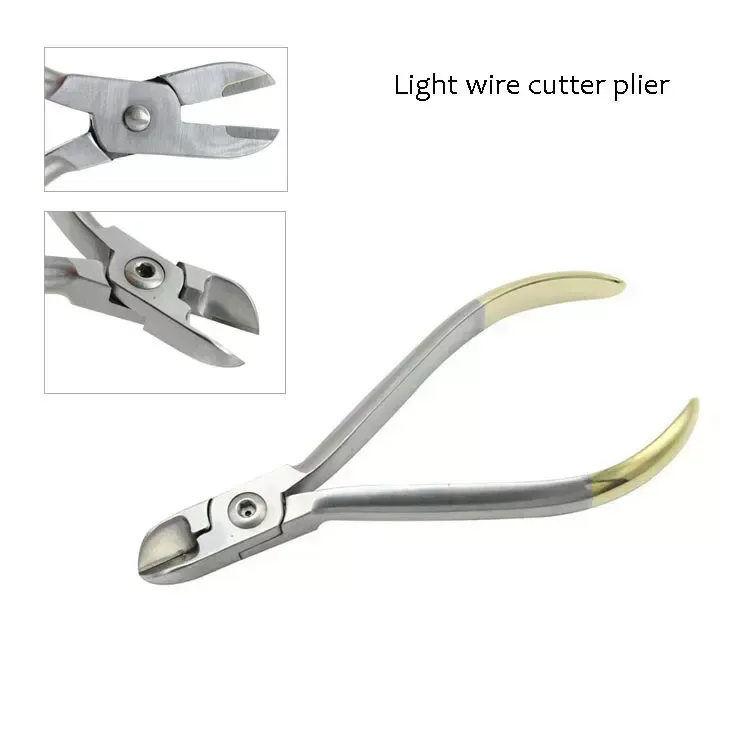
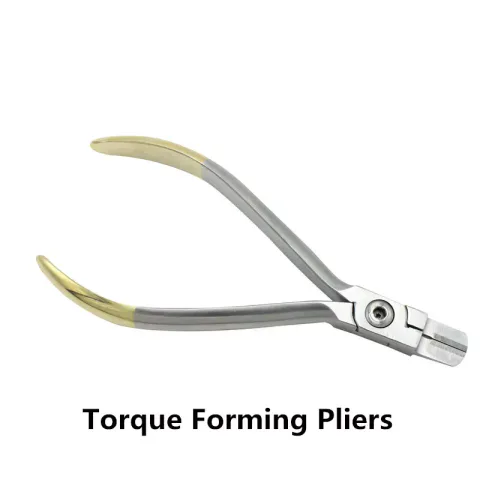
Orthodontic Pliers

Ribbon-Arch Bending Pliers

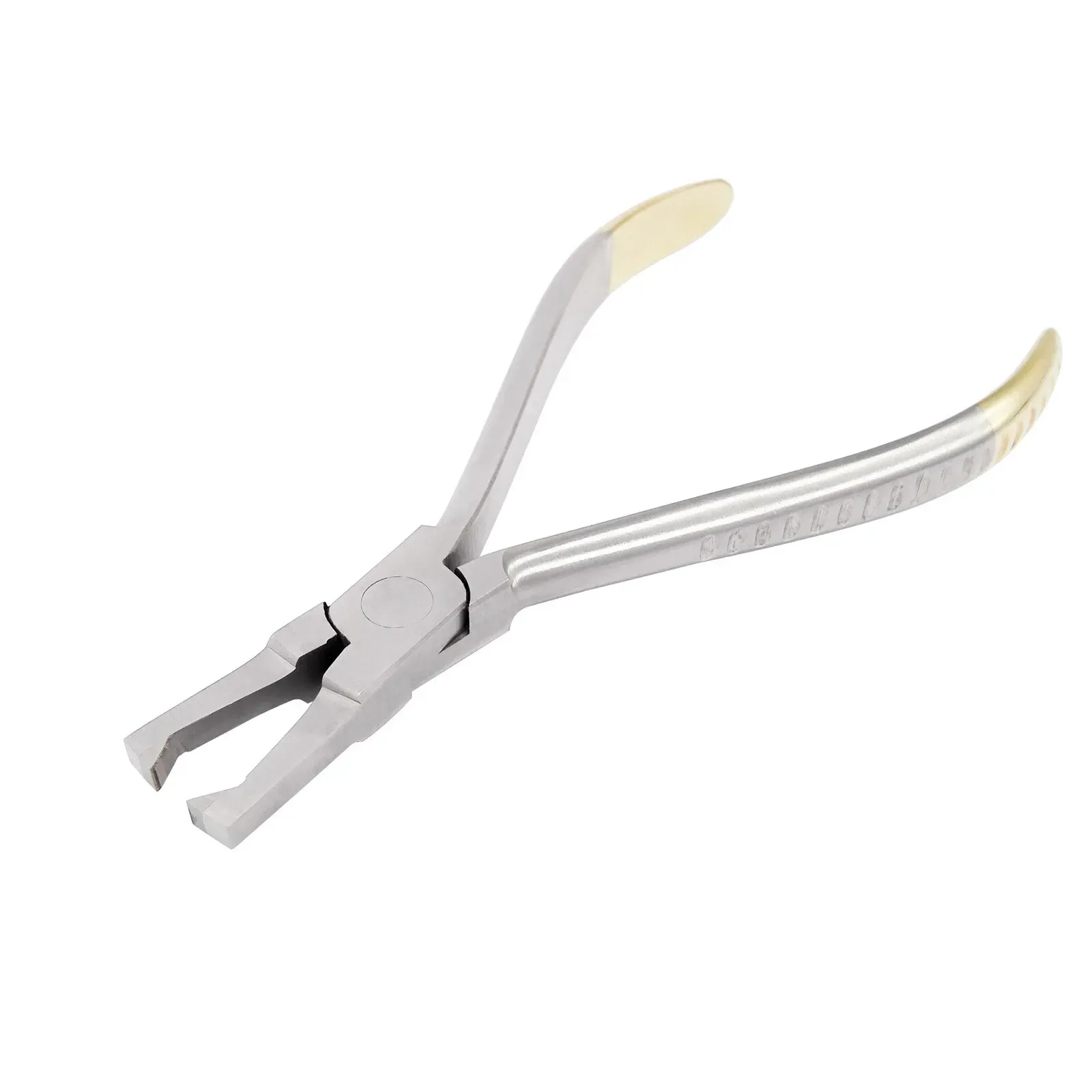
Orthodontic ribbon-arch bending pliers, 12.5 cm long, with broad, short, flat jaws that grip rectangular archwire firmly for bending and adjusting with control.

Product code
DIS-ORTHO-RIBBON
Size
12.5 cm
MOQ
confirmed with your quote

Courier delivery. We ship through DHL, FedEx or another available courier, depending on your destination. We confirm the courier, shipping cost and estimated delivery time with your order. Shipping details

About Ribbon-Arch Bending Pliers

Rectangular archwire has to be bent without twisting or kinking it. Ribbon-arch pliers have broad, short, flat jaws that hold a length of wire firmly and evenly, so you can make bends and adjustments along the wire with control. The flat faces spread the grip over a wider area than a narrow-tipped plier.

How it is made

  • Overall length 12.5 cm.
  • Broad, short, flat jaws.
  • Gold-coloured handle ends.
  • TC (tungsten carbide) working end.

Choosing wire

If you plan to bend a particular wire, tell us its material and size and we confirm the plier suits it. For bending loops of set sizes, see our Kim loop-forming pliers.

Ordering

  • Sold as one complete plier; a torquing key is not included.
  • Evaluation samples of 1–3 pieces per pattern are available.

Care

Keep the flat jaw faces clean and smooth, since nicks will mark the wire, and check that they close evenly. Follow the supplied processing instructions and your facility's validated protocol.

For general wire handling, see our Weingart utility pliers.
Have experience with Ribbon-Arch Bending Pliers?Share verified buyer or evaluator feedback. It takes about a minute.

Ribbon-Arch Bending Pliers Questions

What wire form is associated with ribbon arch-bending pliers?

Rectangular archwire. The ribbon arch-bending pattern has flat, opposed contacts for holding and forming rectangular wire, and this version has broad, short, flat jaws. The association describes the instrument family; it is not a wire-section or material rating for this plier.

How do flat ribbon-arch jaws differ from loop-forming jaws?

Flat opposed jaws give flat gripping and forming contacts, while a loop former uses a different working geometry to shape a loop around its forming contact. This ribbon-arch plier has the short flat-jaw pattern, so a stepped or rounded loop-forming beak should not be assumed from the word bending.

Why compare jaw-pad length when choosing a ribbon arch plier?

Pad length describes the working contact, while overall length describes the whole instrument. This version has short flat pads. When you match a replacement, compare the actual working-face form and dimensions, and do not assume every ribbon-arch plier has the same contact geometry, whatever its label.

Which specifications matter when ordering a replacement ribbon-arch plier?

Compare the working-face shape and pad length, the overall length, and the permitted wire material and cross-section of the exact model. This version has short flat jaws, a 12.5 cm overall length and a TC (tungsten carbide) working end. No numerical wire rating is established for this plier.

Does the ribbon-arch pattern specify a measured torque output?

No measured torque output is specified. The ribbon-arch pattern describes a hand-forming instrument with flat opposed jaws, and a calibrated torque value is a separate documented property. The specifications listed here are the 12.5 cm overall length and the TC (tungsten carbide) designation.

WhatsApp