
Orthodontic Pliers
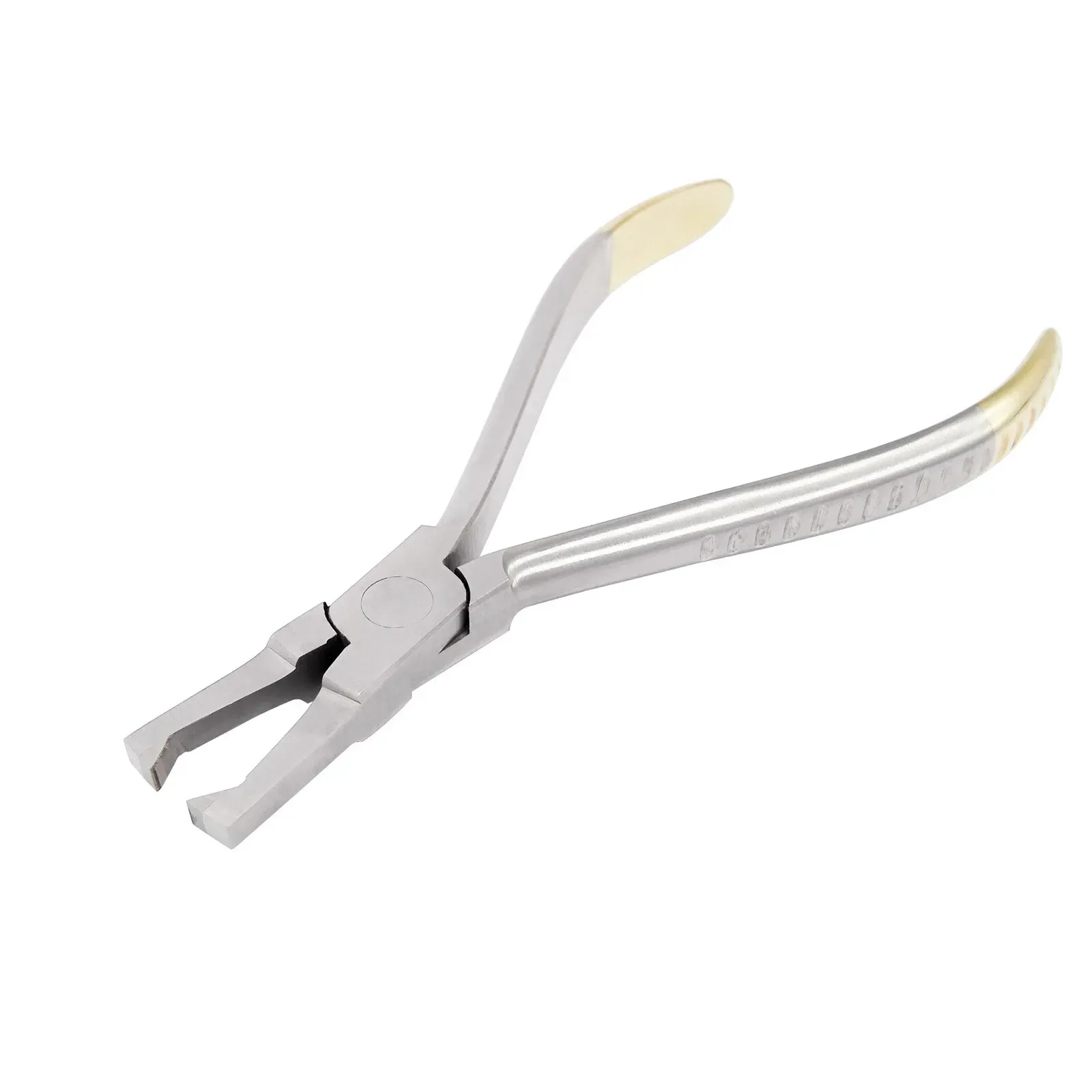
Anterior Bracket-Removing Pliers
Orthodontic pliers with opposing flanged jaws for removing brackets from the front teeth at the end of treatment. About 6.7 inches long, with recessed handles.
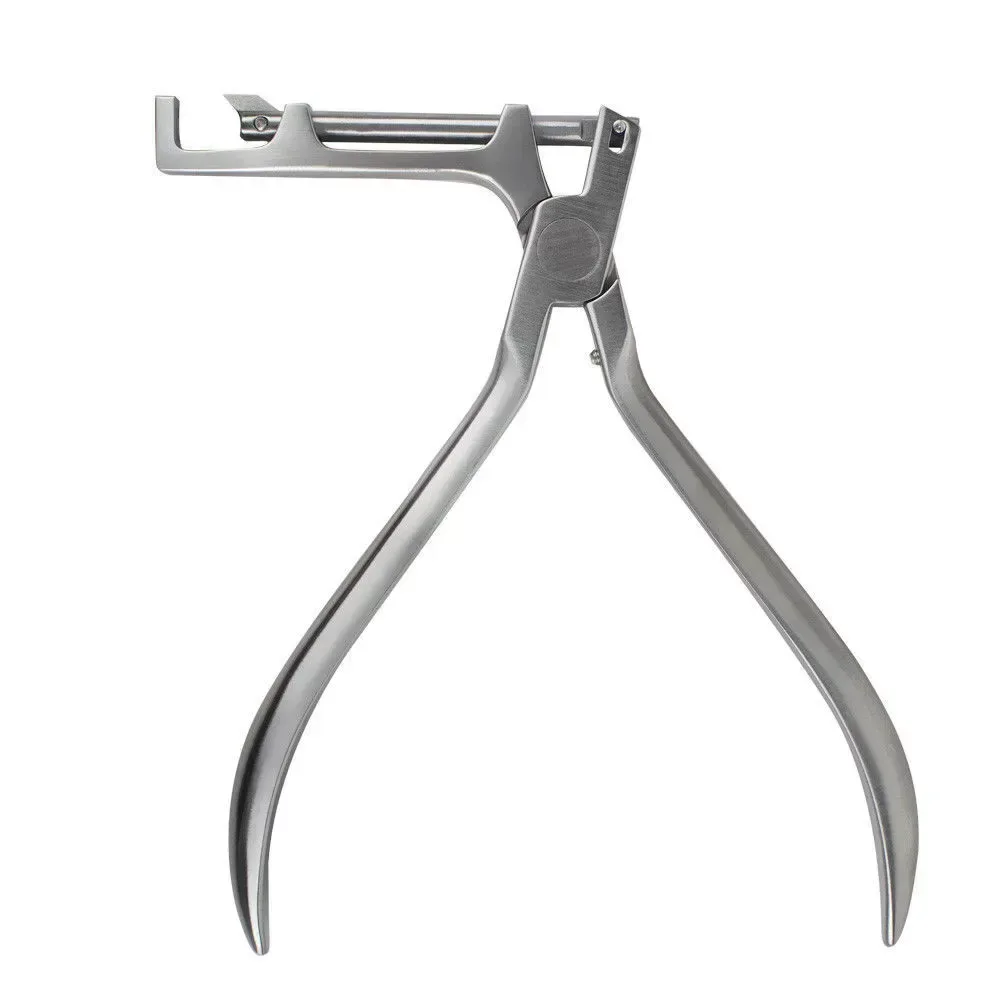
Convertible Buccal Tube Cap Removing Pliers
A dedicated plier for removing the cap from a convertible buccal tube, with an angular working head, a projecting tip and a TC (tungsten carbide) working-end option. Supplied as one complete plier.
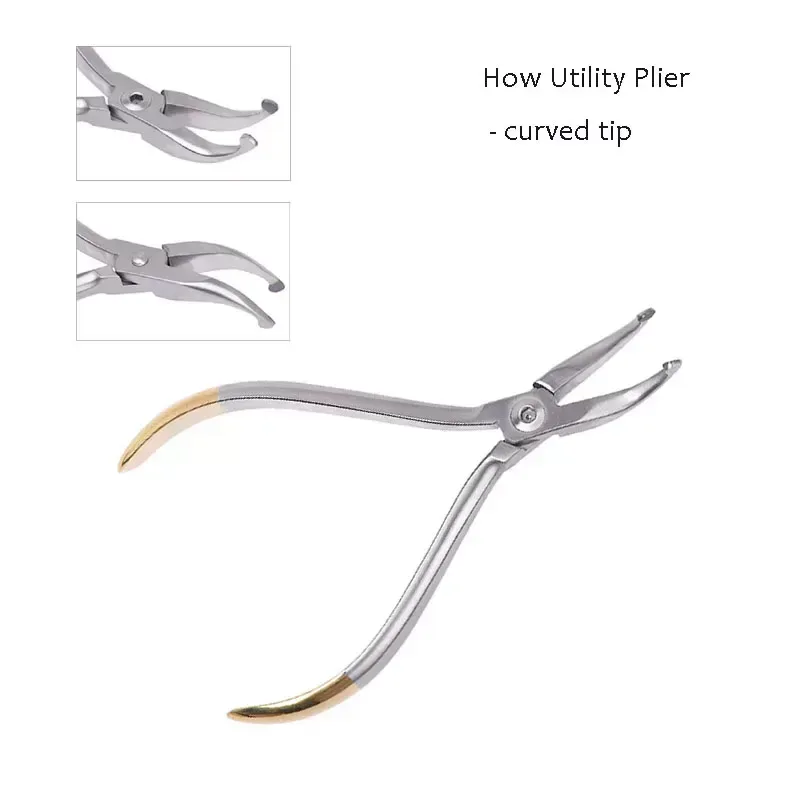
Curved How Utility Pliers
Curved How orthodontic utility pliers, 14 cm long, with broad curved jaws for holding and placing archwires, ligatures and other small parts, especially towards the back of the mouth.
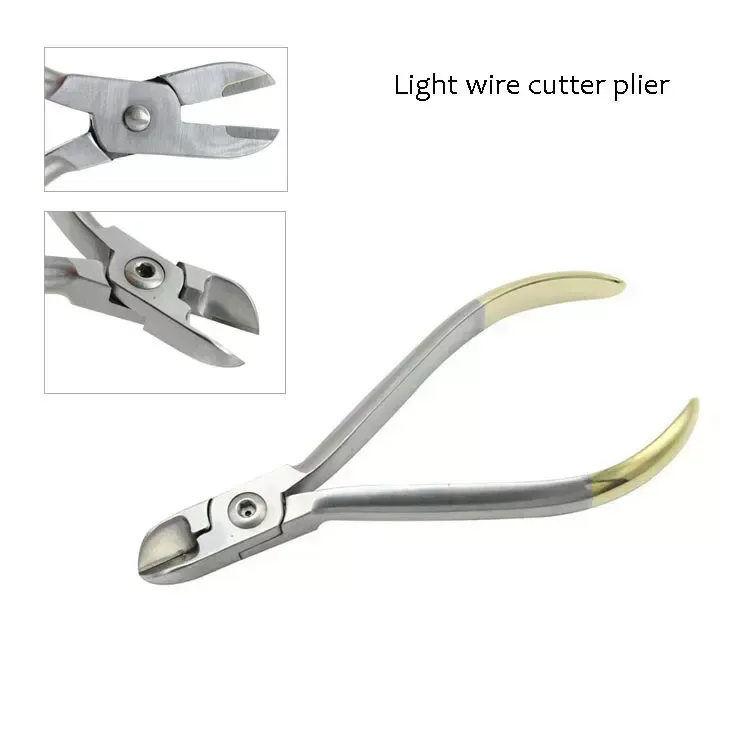
Fine Ligature Wire Cutter
Orthodontic ligature wire cutter, 12.5 cm long, with a fine, narrow cutting head for trimming ligature ties close to the bracket.
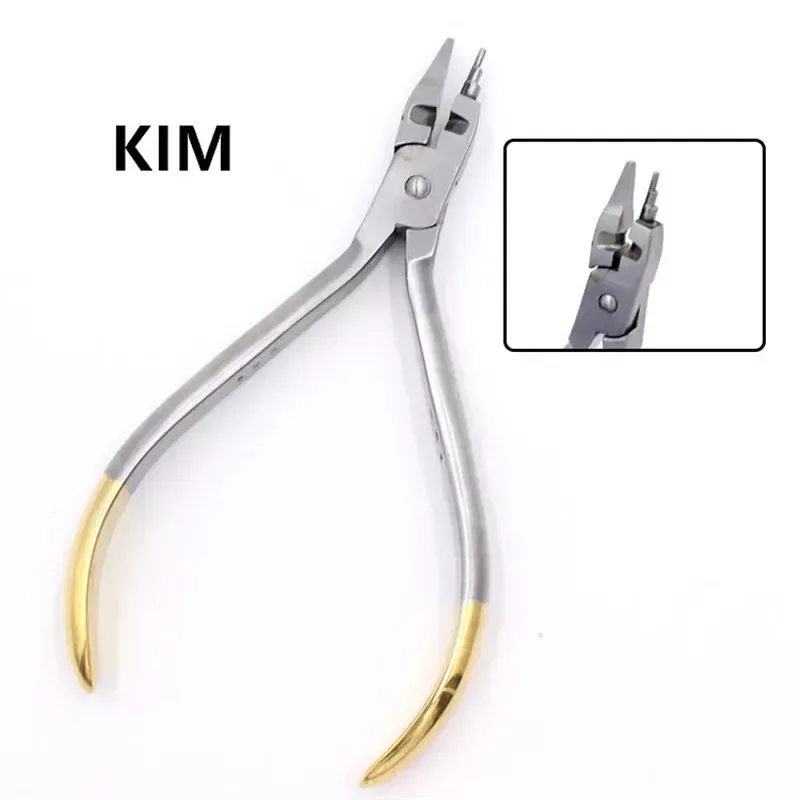
Kim Loop-Forming Pliers with Cutter
Kim orthodontic pliers, 12.5 cm overall, with a TC (tungsten carbide) designation. One instrument combines a stepped round beak for forming loops in archwire with an integral cutter for trimming.
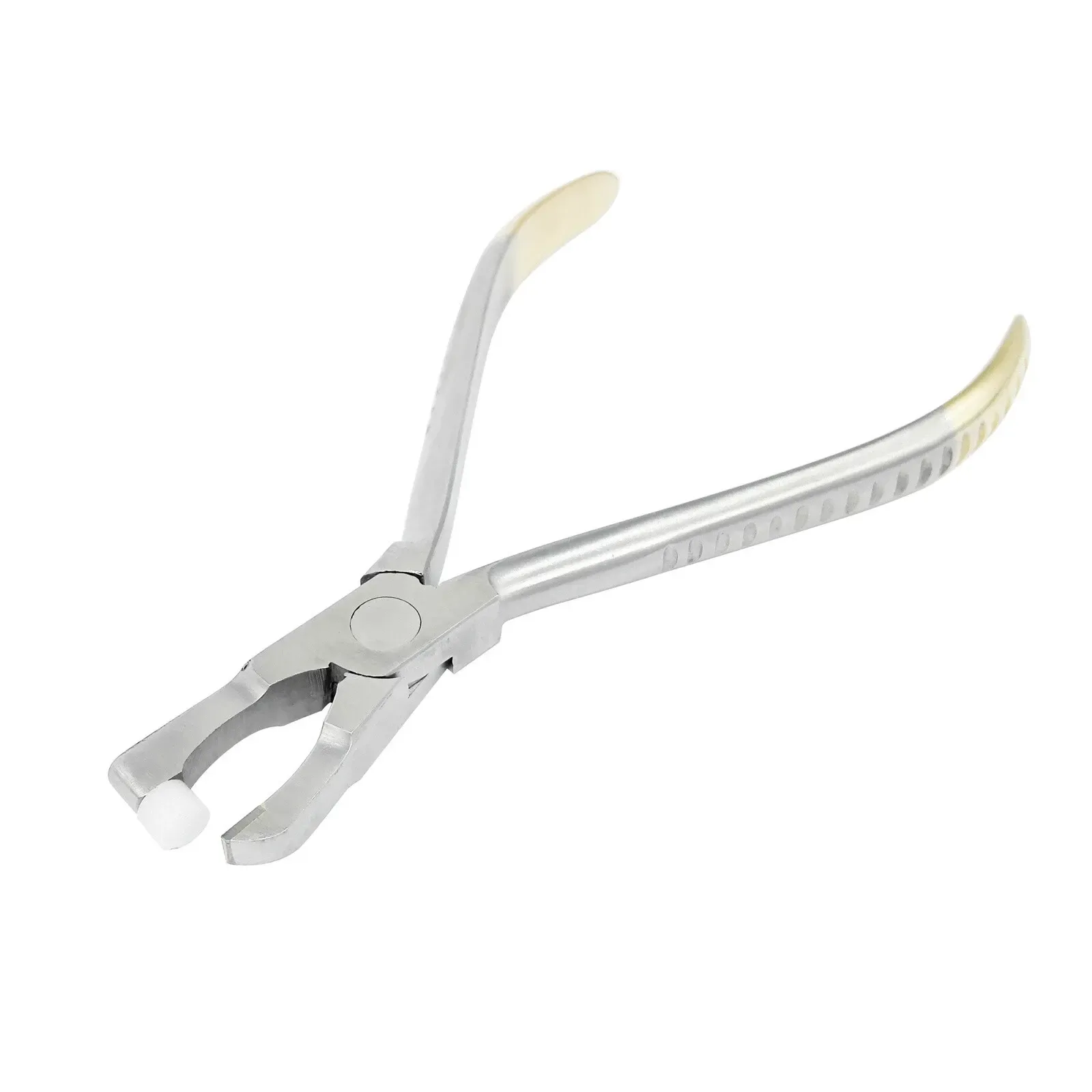
Orthodontic Band-Removing Pliers
Orthodontic band-removing pliers, 13 cm long, with a white contact pad that rests on the biting surface of the tooth and a metal beak that hooks under the band edge to lift it off.
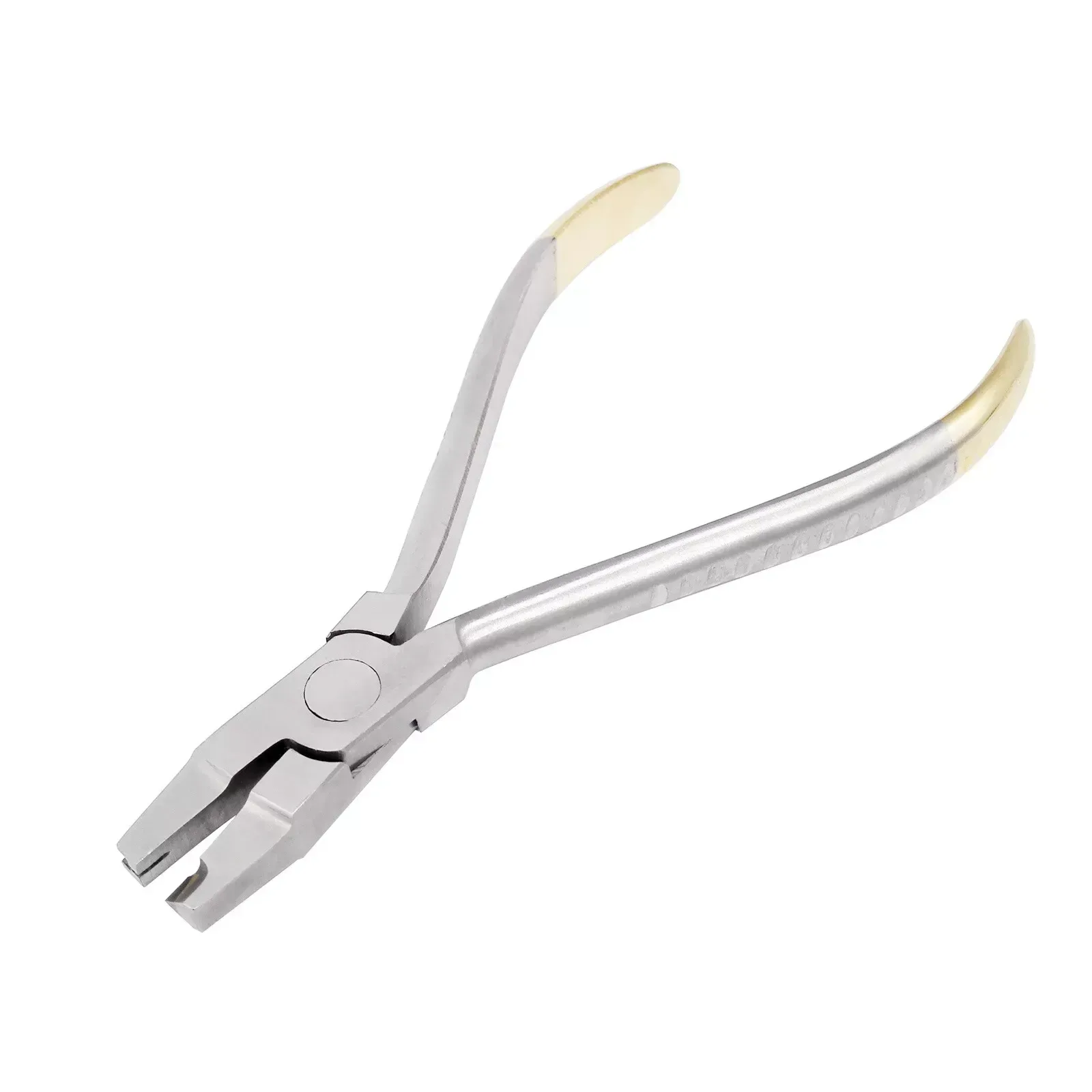
Orthodontic Hook-Crimping Pliers
Orthodontic hook-crimping pliers, 12.5 cm long, with a slotted head that squeezes crimpable hooks and stops onto the archwire so they stay where you place them.
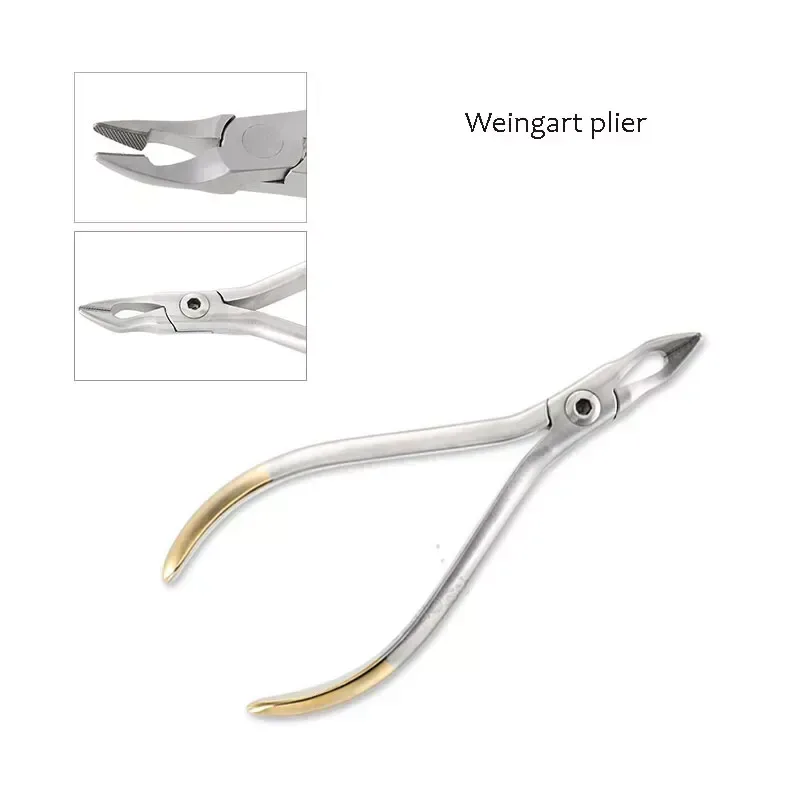
Orthodontic Weingart Utility Pliers
Orthodontic Weingart utility pliers, 14 cm overall, with tungsten carbide (TC) working ends. Tapered, angled serrated jaws grip and position archwire and small orthodontic parts. Supplied as one complete plier.
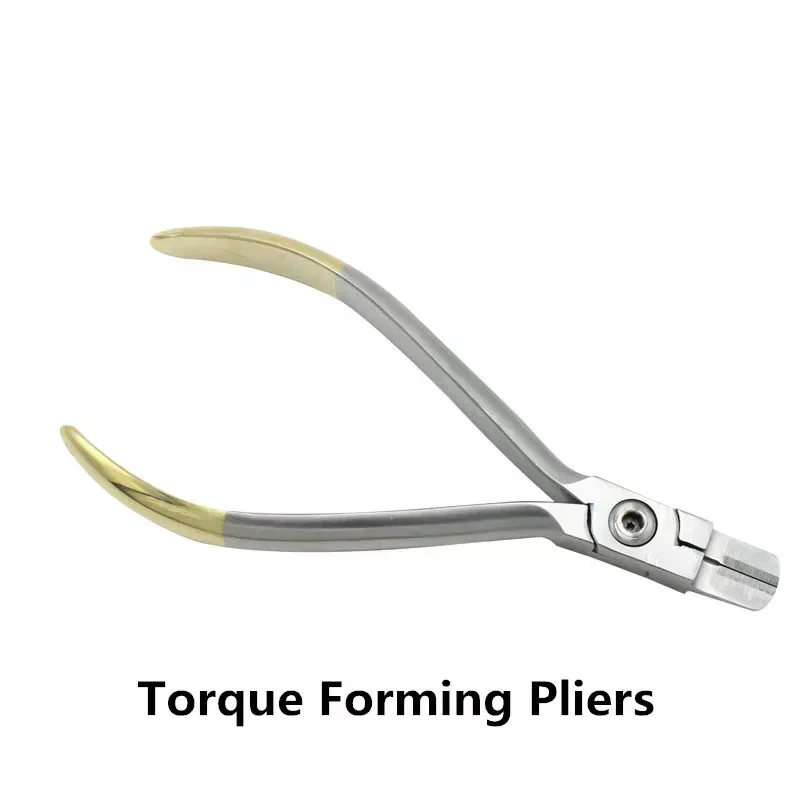
Ribbon-Arch Bending Pliers
Orthodontic ribbon-arch bending pliers, 12.5 cm long, with broad, short, flat jaws that grip rectangular archwire firmly for bending and adjusting with control.
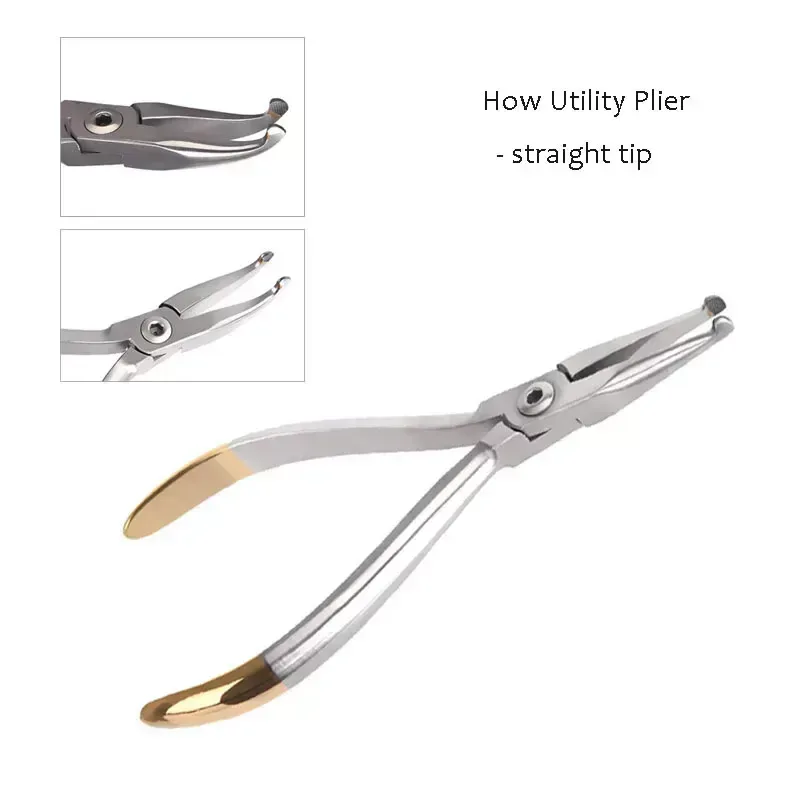
Straight How Utility Pliers
Straight How orthodontic utility pliers, 14 cm long, with broad gripping jaws for holding and placing archwires, ligatures and other small parts, especially towards the front of the mouth.
Orthodontic Pliers Selection Summary
| Specification | Details |
|---|---|
| Current products | Weingart Utility Pliers and a grouped orthodontic plier range |
| Jaw fields | Purpose, jaw profile, tip dimensions, smooth or serrated surface, angle, and cutting edge where present |
| Capacity fields | Verified wire material, shape, and diameter or dimension for the exact variation |
| Construction | Joint, return spring, handle, insert material where verified, overall length, and finish |
| Order details | Pattern, capacity, quantity, marking, replacement parts, packaging, and destination |
Orthodontic Pliers FAQ
How do I choose between holding, bending and cutting orthodontic pliers?
Start with the requested function, then compare jaw shape, tip dimensions and the named pattern. Holding and forming tools should be listed separately from cutters. Where wire suitability matters, use the capacity and conditions documented for the exact instrument rather than assuming every plier in the orthodontic range shares a rating.
What should I compare when ordering a Weingart-type plier?
Keep the exact pattern reference with the jaw profile, angulation, tip dimensions and overall length specified for the required instrument. Those fields describe its reach and working end more clearly than the pattern name alone. For a replacement, compare the accepted reference or photographs with the proposed configuration.
Is a flush distal-end cutter necessarily a cut-and-hold model?
No. Flush describes cutting geometry, while cut-and-hold describes retention of the cut segment, and manufacturer ranges offer these features in different combinations. Identify retention behavior and its documented conditions for the exact model separately from the flush designation, and keep the rated wire material and dimensions with that reference.
How should a wire-capacity specification be compared across cutters?
Compare wire material, shape, full dimensions, units and any stated conditions together. A round-wire value and a rectangular-wire pair describe different cross-sections. Keep the exact model attached to its rating and preserve source units; a headline maximum without these fields is incomplete for a purchasing comparison.
Does an orthodontic-plier family listing contain a fixed set?
No. A family listing presents separate patterns for selection; a fixed set needs a schedule naming each included plier or cutter and its quantity. Order the selected reference when replenishing one instrument, and compare the complete itemized assortment when buying a set, so alternative patterns are not mistaken for included members.
Need Orthodontic Pliers in Bulk?
Send your instrument list and quantities for manufacturer-direct pricing, custom branding, or mixed-category quotes.