Orthodontic Pliers

Orthodontic Band-Removing Pliers

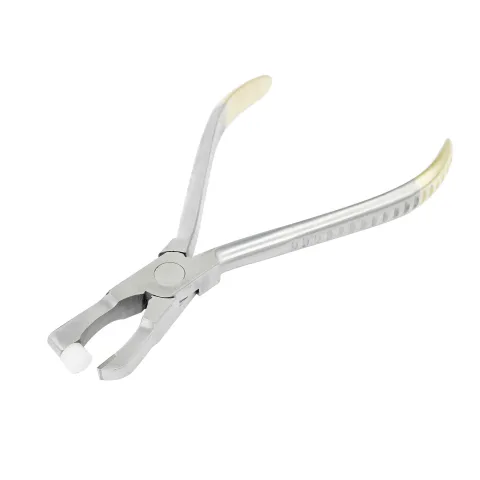
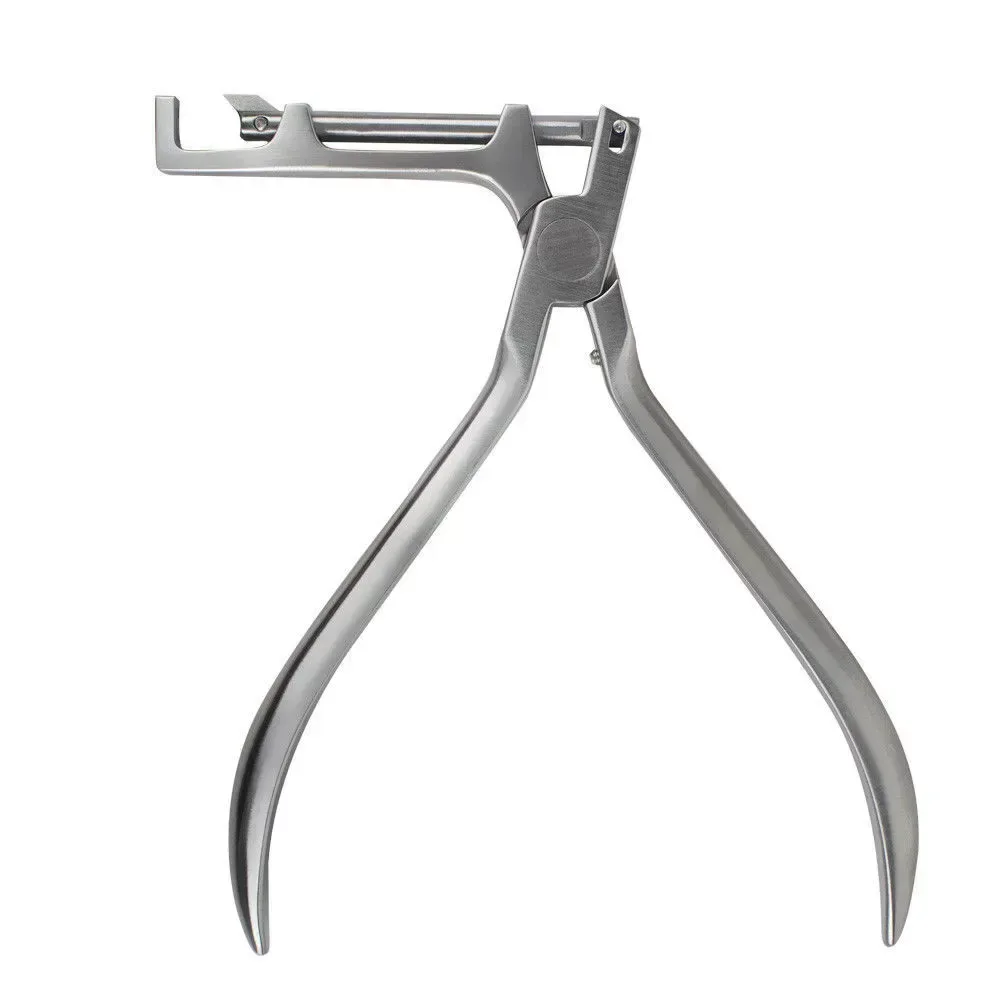
Orthodontic band-removing pliers, 13 cm long, with a white contact pad that rests on the biting surface of the tooth and a metal beak that hooks under the band edge to lift it off.

Product code
DIS-ORTHO-BAND-REM
Size
13 cm
MOQ
confirmed with your quote

Courier delivery. We ship through DHL, FedEx or another available courier, depending on your destination. We confirm the courier, shipping cost and estimated delivery time with your order. Shipping details

About Orthodontic Band-Removing Pliers

Molar bands are metal rings cemented around the back teeth to hold tubes and attachments. At the end of treatment they are taken off with a band remover. The white pad rests on the biting surface of the tooth as a stable, cushioned support, while the metal beak engages the edge of the band and lifts it free.

How it is made

  • Overall length 13 cm.
  • One white contact pad fitted opposite a metal beak.
  • TC (tungsten carbide) working end.

Band remover or bracket remover?

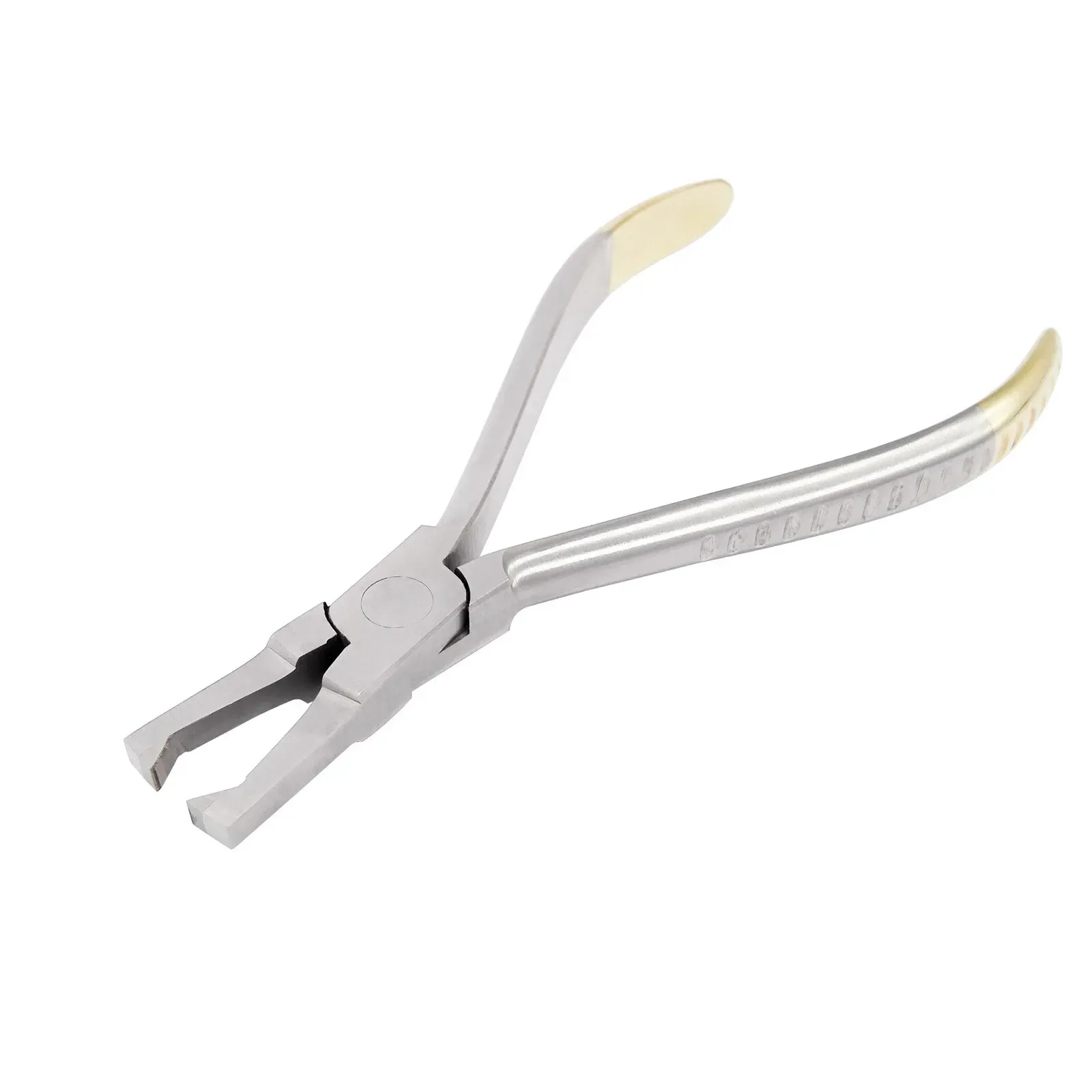
A band remover has a pad on one side and is used for bands on the back teeth. Bracket removers have two metal jaws and are used for brackets. See our anterior bracket-removing pliers and bracket remover pliers.

Replacement pads

Pads wear with use. The plier comes with one fitted pad; spare pads are not included. If you want spares, ask in your quotation and we confirm pads that fit this plier.

Ordering

  • Sold as one plier with one fitted pad.
  • Evaluation samples of 1–3 pieces per pattern are available.

Care

Check that the pad is firmly attached and not cracked, and replace it when worn. Follow the supplied processing instructions and your facility's validated protocol.
Have experience with Orthodontic Band-Removing Pliers?Share verified buyer or evaluator feedback. It takes about a minute.

Orthodontic Band-Removing Pliers Questions

What kind of appliance do these band-removing pliers handle?

Orthodontic bands, the metal rings that encircle a tooth. The plier has a tooth-side pad opposite a metal band-engaging beak, and that pad-and-beak arrangement is the feature to match when you replace a band remover.

Why is there a white pad opposite the metal beak?

The pad is the tooth-side supporting contact and the beak engages the band, so the two contacts do different jobs. On this plier the white part is the fitted pad. Its color does not tell you what it is made of, and the TC (tungsten carbide) designation applies to the working-end construction, not to the pad.

How do band-removing pliers differ from bracket-removing pliers?

A band encircles a tooth, while a bracket is a separate bonded attachment. The band-removing pattern uses a supporting pad and a band-engaging beak; a bracket remover has jaws shaped to engage a bracket. Match the instrument to the appliance rather than choosing by the word removing.

Which details identify a replacement band-remover pad?

Match a replacement pad to the remover's reference, the pad dimensions and the mounting geometry. The fitted pad on this version is white, but color alone does not establish a match. Pad fit is a separate specification from the plier's overall length and its TC (tungsten carbide) designation.

What does the 13 cm TC specification identify?

13 cm is the overall length of the plier, and TC (tungsten carbide) identifies the working-end construction. Both describe this band-removing version, and neither tells you the fitted pad's material or how it is mounted. When you match an existing tool, compare the pad-and-beak form along with the overall length.

WhatsApp