Prosthodontic Instruments

Dental Calipers

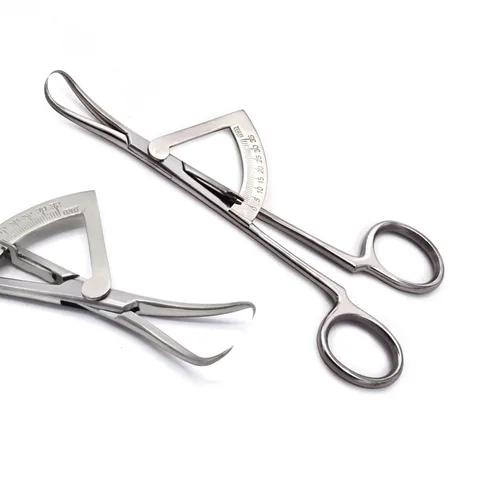
A ring-style dental ridge mapping caliper with curved, opposing pointed tips and a graduated millimeter arc reading from 0 to 35 mm, for measuring the width and thickness of the alveolar ridge.

For the configuration above, leave this unselected. Choose a reference only when requesting that specific catalogue option.

Listed pricing
Listed configuration $6.00
In stock. Final price depends on the selected configuration and order requirements.
Choose an option2 available

Pick an option to add it to your quote request, or compare every option below.

Product code
DIS-GRP-CALIPERS
Catalogue references
2 available
MOQ
confirmed with your quote

Courier delivery. We ship through DHL, FedEx or another available courier, depending on your destination. We confirm the courier, shipping cost and estimated delivery time with your order. Shipping details

About Ring-style ridge mapping caliper, 0–35 mm

Our ring-style ridge mapping caliper measures the width and thickness of the alveolar ridge, with a scale that reads from 0 to 35 mm. It is a manual instrument: you set the tips against the ridge and read the measurement directly from the scale, with no batteries or display to manage.

How it is built

  • Two finger rings: open and close the hinged arms with one hand, the way you would use scissors.
  • Curved, opposing pointed tips: reach around the ridge and meet it from either side.
  • Graduated millimeter arc: attached to the arms, it shows the distance between the tips as you close them, so the reading is taken on the instrument itself.

What it is for

A ridge mapping caliper is used in implant planning and bone assessment to gauge how wide or thick the ridge is at a given point. Its pointed contact tips and 0–35 mm range are made for that task.

It is a different instrument from a crown or wax thickness gauge, such as an Iwanson-type spring caliper, which measures the thickness of restoration materials like wax, metal or porcelain. Both read in millimeters, but they are shaped for different jobs.

Requesting a quote

Ask for the ring-style ridge mapping caliper, 0–35 mm (reference DIS-GRP-CALIPERS), and tell us the quantity you need.
Catalogue references

Compare the product code and attributes before requesting a quote. Choose an exact option whenever you are matching an existing order.

2 options
OptionProduct codeAttributesPricingRequest quote
Pattern 127DIS-CAT-0754Pattern: Pattern 127Listed configuration $6.00Select for Quote
Pattern 128DIS-CAT-0755Pattern: Pattern 128Listed configuration $6.00Select for Quote
Have experience with Dental Calipers?Share verified buyer or evaluator feedback. It takes about a minute.

Dental Calipers Questions

What type of measurement is this dental caliper intended for?

It is a ring-style bone ridge-mapping caliper with opposing contact tips for measuring ridge width or thickness, and its 0–35 mm nominal scale identifies the range. That is a different measuring task from checking the thickness of a crown or wax restoration.

Does the 0–35 mm range specify the caliper's accuracy?

No. Range describes the span of the scale, graduation interval describes the scale divisions, and accuracy concerns how close a measured value is to the true value. Those are separate specifications, so a range label should not be used as an accuracy claim.

How is the ring-style caliper's reading displayed?

On a graduated arc marked in millimeters, which is a manual reading format. This model has two finger rings, hinged arms and curved opposing pointed tips; the tips define the contact separation, and the arc shows the reading.

How does a ridge-mapping caliper differ from an Iwanson thickness gauge?

A ridge-mapping caliper has opposing contacts for ridge-width assessment, while manufacturers list separate Iwanson wax and metal gauges with different contact forms. Identify the measuring task and the contact design when you choose between ridge calipers and laboratory thickness gauges.

Which details identify this ring-style ridge caliper for a replacement requirement?

Match the ridge-mapping pattern, the nominal 0–35 mm scale and the ring-handled form with curved opposing pointed contacts. Those details identify the pictured manual ridge caliper more precisely than the broad term "dental caliper".

WhatsApp