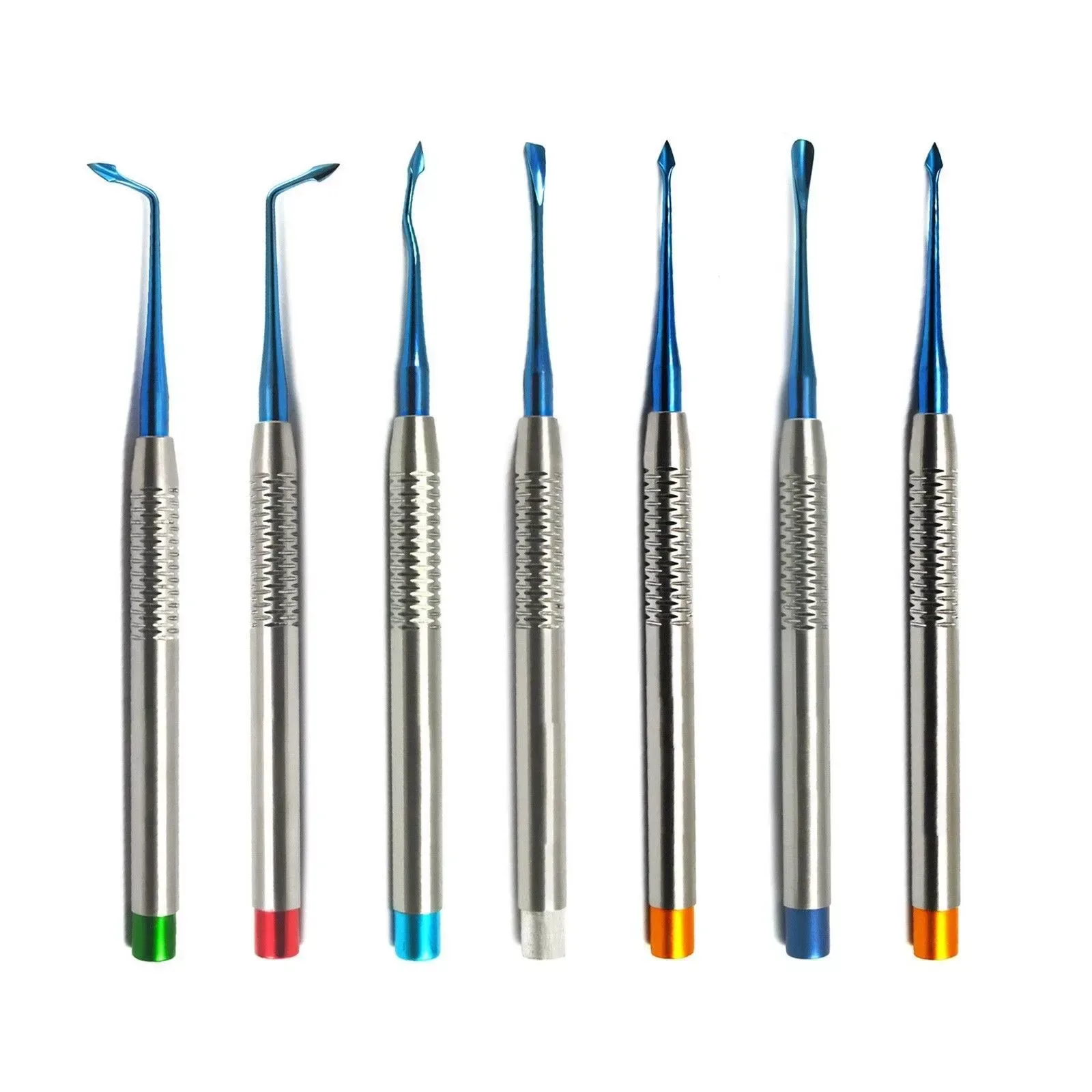
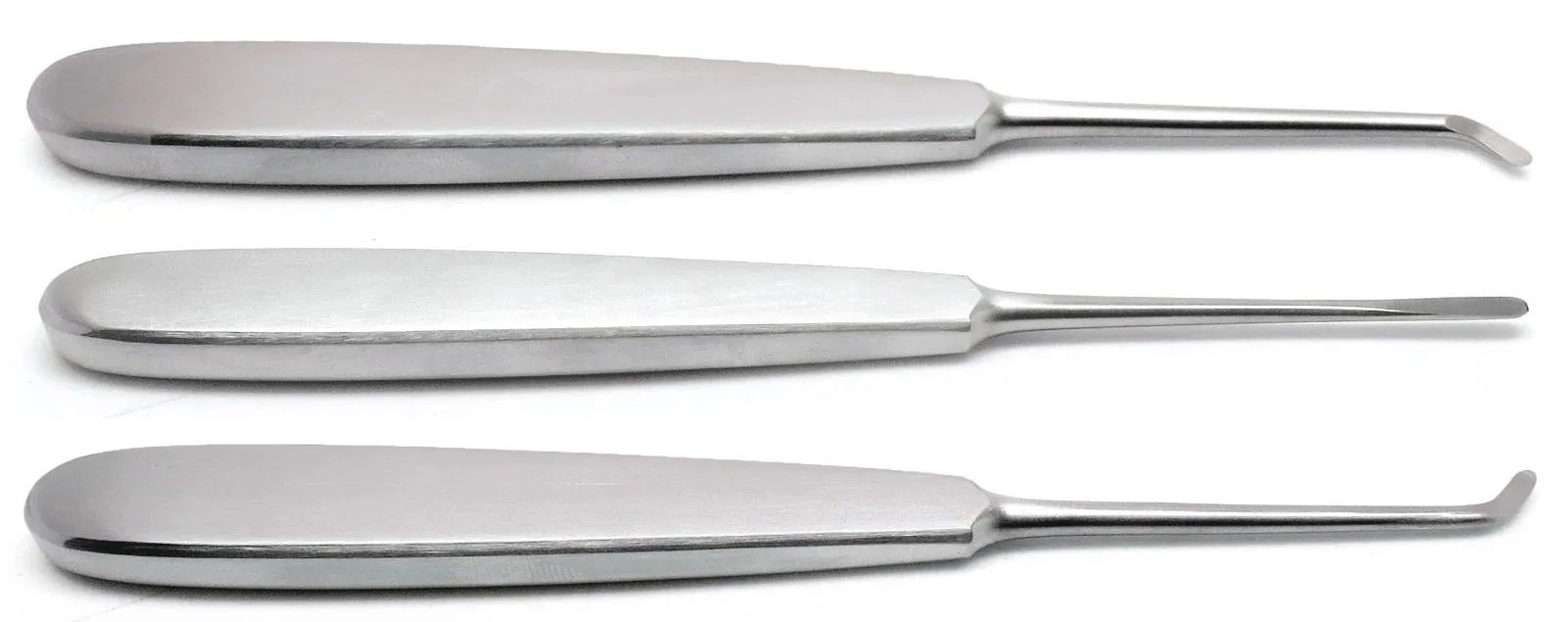
Dental Elevators

Straight Dental Elevators

Straight dental elevators for loosening teeth before extraction, in Coupland, Bein, Flohr, London Hospital and 301-style patterns, sold singly or as graduated sets of increasing blade width.

Select an option to see its details and include it in your quote.

Listed pricing
Listed configuration $15.00
In stock. Final price depends on the selected configuration and order requirements.
Product code
DIS-ELV-STR-GRP
Material
Stainless steel; grade confirmed for the selected pattern
Finish
Satin or polished, confirmed in your quotation
Size
Varies by pattern and blade width
Options
8 available
MOQ
confirmed with your quote

Courier delivery. We ship through DHL, FedEx or another available courier, depending on your destination. We confirm the courier, shipping cost and estimated delivery time with your order. Shipping details

About Straight Dental Elevators

A straight elevator has a straight shank and a flat, slightly concave blade. It is usually the first instrument used in an extraction: the blade is placed between tooth and bone and turned gently to stretch the periodontal ligament and loosen the tooth before forceps are applied. We offer the common straight patterns singly and as graduated sets.

The patterns

  • 301-style: the general-purpose straight elevator found on most extraction trays.
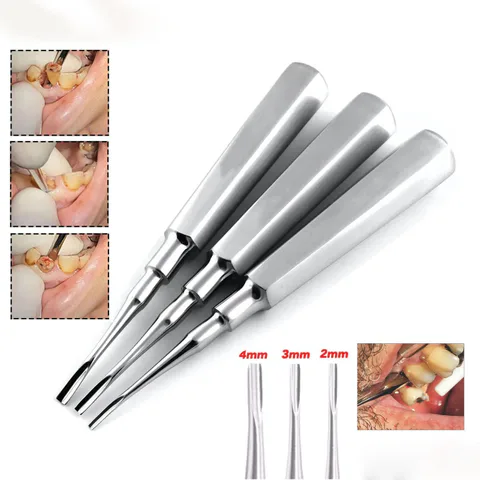
  • Coupland: straight elevators in graduated blade widths, narrow to broad. The photographs show a Coupland set of three.
  • Bein: a narrow, pointed straight elevator for tighter spaces.
  • Flohr and London Hospital: further straight patterns with their own blade shapes.

Single or graduated set

A graduated set gives you narrow, medium and broad blades in one order, so you can start narrow and move wider as the tooth loosens. Order a single pattern if you only need to replace one. We confirm each blade width in your quotation.

Straight elevator or another instrument?

Straight elevators are for initial loosening. For removing a remaining root, see our root elevators, including Cryer patterns. For cutting the ligament with a fine blade, see our luxating elevator set.

Ordering

  • Choose each pattern or set by product code.
  • Evaluation samples of 1–3 pieces per pattern are available.

Care

Check the blade tip after each use; a rounded or chipped tip grips poorly and should be replaced. Follow the supplied processing instructions and your facility's validated protocol.
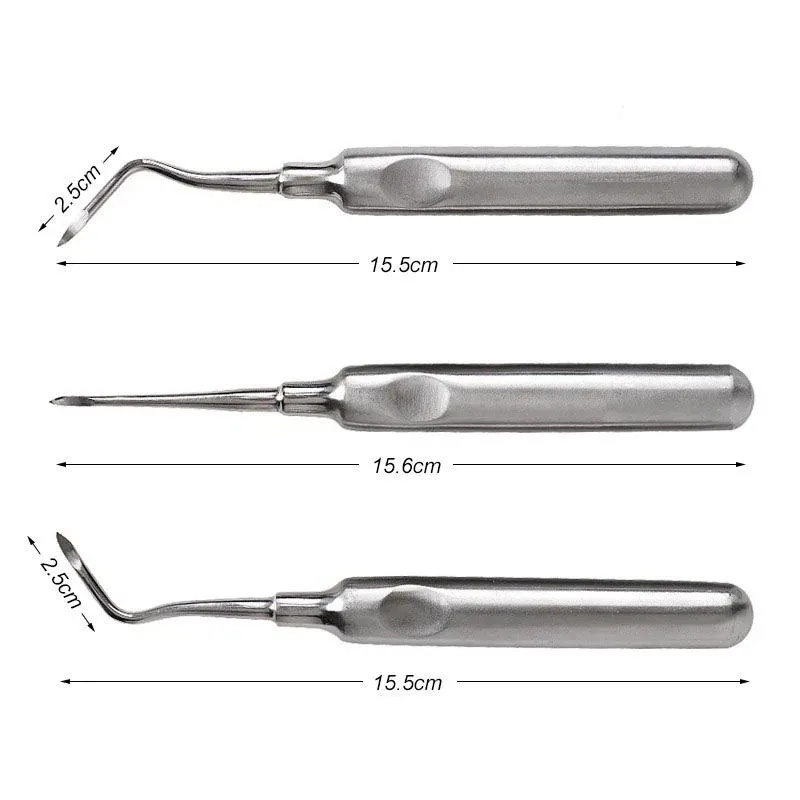
Dental extraction tray setup

Available Options

Compare the product code and attributes before requesting a quote. Choose an exact option whenever you are matching an existing order.

8 options
OptionProduct codeAttributesPricingRequest quote
301-Style Straight ElevatorDIS-ELV-STR-GRP-301Pattern or Configuration: 301-Style Straight Elevator$8.00–$14.00Select for Quote
Coupland Graduated SetDIS-ELV-STR-GRP-CPLPattern or Configuration: Coupland Graduated Set$8.00–$14.00Select for Quote
Bein PatternDIS-ELV-STR-GRP-BEINPattern or Configuration: Bein Pattern$8.00–$14.00Select for Quote
Flohr PatternDIS-ELV-STR-GRP-FLRPattern or Configuration: Flohr Pattern$8.00–$14.00Select for Quote
London Hospital PatternDIS-ELV-STR-GRP-LHPattern or Configuration: London Hospital Pattern$8.00–$14.00Select for Quote
Coupland Pattern SelectionDIS-ELV-STR-GRP-COUPPattern or Configuration: Coupland Pattern Selection$8.00–$14.00Select for Quote
Flohr Straight PatternDIS-ELV-STR-GRP-FLOHRPattern or Configuration: Flohr Straight Pattern$8.00–$14.00Select for Quote
Graduated Straight Elevator SetDIS-ELV-STR-GRP-SETPattern or Configuration: Graduated Straight Elevator Set$8.00–$14.00Select for Quote
Have experience with Straight Dental Elevators?Share verified buyer or evaluator feedback. It takes about a minute.

Straight Dental Elevators Questions

What is the role of a straight dental elevator?

A straight dental elevator is a manual extraction instrument in the tooth- and root-loosening or elevating family. Straight describes the form, and the named pattern and working-end geometry identify the particular design; Coupland is one named pattern within that family.

Which working-end widths are identified in the Coupland selection?

The Coupland selection has nominal working-end widths of 2, 3 and 4 mm. These values identify the labeled working ends, so use both Coupland and the required width when you compare an instrument.

Do Coupland figures 1, 2 and 3 always correspond to 2, 3 and 4 mm?

No. Numbered figures belong to a particular manufacturer's range and are not a universal millimeter sequence, and Coupland ranges and sets publish differing width schedules. Preserve the actual model reference and its stated working-end width when you match a replacement.

Can another straight elevator pattern be selected by width alone?

No. Width describes one working-end dimension, and Coupland, Bein, Flohr and other straight-pattern names can denote different working-end designs, so replacement identification also needs the pattern and the complete reference. Compare the end shape and handle form where they matter to your requirement.

What handle and shaft form is shown with the labeled Coupland working ends?

The 2, 3 and 4 mm forms shown share elongated, longitudinally faceted handles and comparatively straight shafts leading to widened blade ends. That handle profile is part of the configuration shown, to compare alongside the Coupland working-end reference.

WhatsApp