Dental Implant Instruments

Manual Rotary Bone Mill

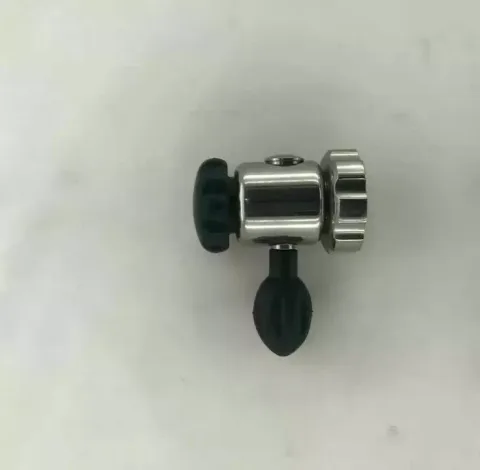
Hand-turned rotary bone mill with a cylindrical body and black side handles, for grinding pieces of harvested bone into particles for grafting.

Product code
DIS-IMP-MILL-ROT
Size
Confirmed in your quotation
MOQ
confirmed with your quote

Courier delivery. We ship through DHL, FedEx or another available courier, depending on your destination. We confirm the courier, shipping cost and estimated delivery time with your order. Shipping details

About Manual Rotary Bone Mill

Bone collected during surgery can be used as graft material from the patient's own bone, but larger pieces need to be ground into particles first. A manual bone mill does this by hand: the bone goes into the chamber and turning the mill grinds it, with no motor or power needed.

How it is made

  • Cylindrical body containing the grinding chamber.
  • Black side handles for grip while turning.
  • Opens for loading and emptying the chamber.

We list the detachable parts supplied with the mill in your quotation. If you need to know the chamber size, ask and we confirm.

Mill, crusher or scraper?

Ordering

  • Sold as one mill.
  • Evaluation samples are available.

Care

Open the mill and remove all bone from the chamber and grinder straight after use. Follow the supplied processing instructions and your facility's validated protocol.
Have experience with Manual Rotary Bone Mill?Share verified buyer or evaluator feedback. It takes about a minute.

Manual Rotary Bone Mill Questions

What does a manual rotary bone mill process?

It mechanically reduces bone fragments that have already been harvested into smaller pieces for graft preparation. Manual rotary identifies hand-powered rotation in this processing design, and the mill performs a different task from a scraper used at a bone surface.

How do the mill housing and grinding mechanism differ?

The housing provides the processing space, while the grinding mechanism performs the size reduction through rotary movement. They are separate functional elements of a mill assembly; describing them this way explains the design without treating the exterior as a complete internal-parts or shipment schedule.

Does a larger outside dimension mean a larger bone-mill capacity?

No. Outside dimensions describe the instrument envelope, chamber capacity describes the usable processing space and the insertion opening describes a separate input aperture. Compare those specification fields independently instead of using the exterior size to infer capacity.

Does a cutter opening specify the final particle distribution?

No. A cutter or insertion-opening dimension describes one part of the mechanism, while a particle-output specification describes the processed material and needs its own stated basis. Compare an output specification separately from the opening and the overall instrument dimensions.

How does this fragment-processing mill differ from an implant-platform bone mill?

This manual rotary mill processes harvested bone fragments, while one implant system, for example, describes guides used with corresponding bone mills to remove bone around an implant platform. The material being processed and the matched guide-and-platform interface distinguish those instrument tasks.

WhatsApp