About Custom Dental Student Instrument Kits
Our custom dental student instrument kits are assembled to the instrument list your school or course issues. Different courses call for different combinations, so there is no single fixed kit: the list decides which instruments go in, in which patterns, and how many of each.
Instrument groups we build kits from
A course list usually falls into one or more of these groups:
- Examination: mirror, explorer, probe and cotton pliers. A mirror can be listed as a complete assembly or as a separate head and handle, and an explorer and probe can be separate instruments or one double-ended combination.
- Restorative: carriers, condensers, burnishers, carvers and placement instruments. These cover different material-handling and shaping tasks, and a named carver pattern is more specific than "restorative instrument".
- Periodontal: probes, scalers, and universal and Gracey curettes. The list's probe scale and its named curette or scaler figures matter, and a group name alone does not say which Gracey figures or how many are needed.
- Endodontic: hand instruments and rubber dam instruments. Individual hand instruments and rubber dam items are listed separately, and a single clamp number is a different request from a full dam assortment.
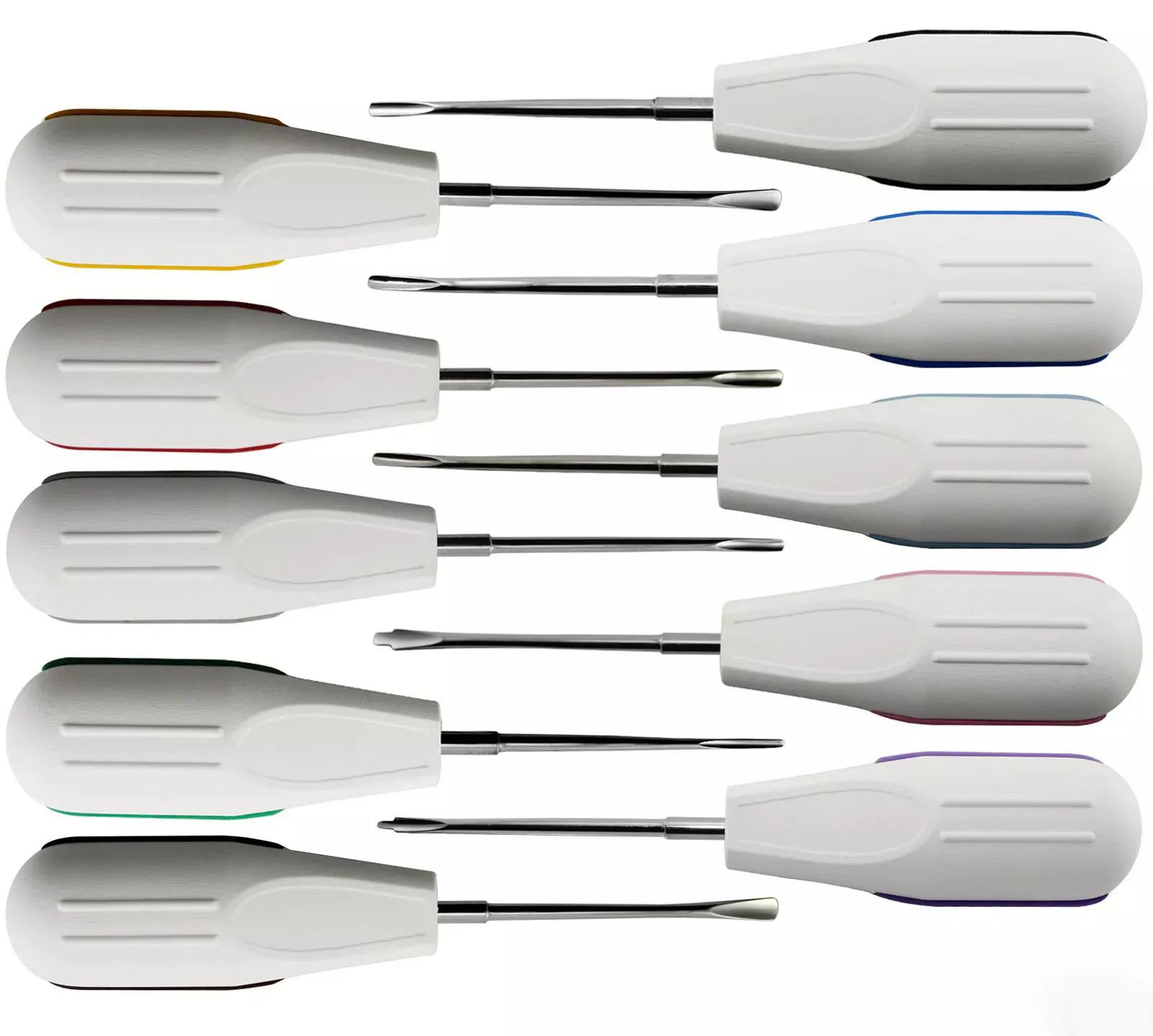
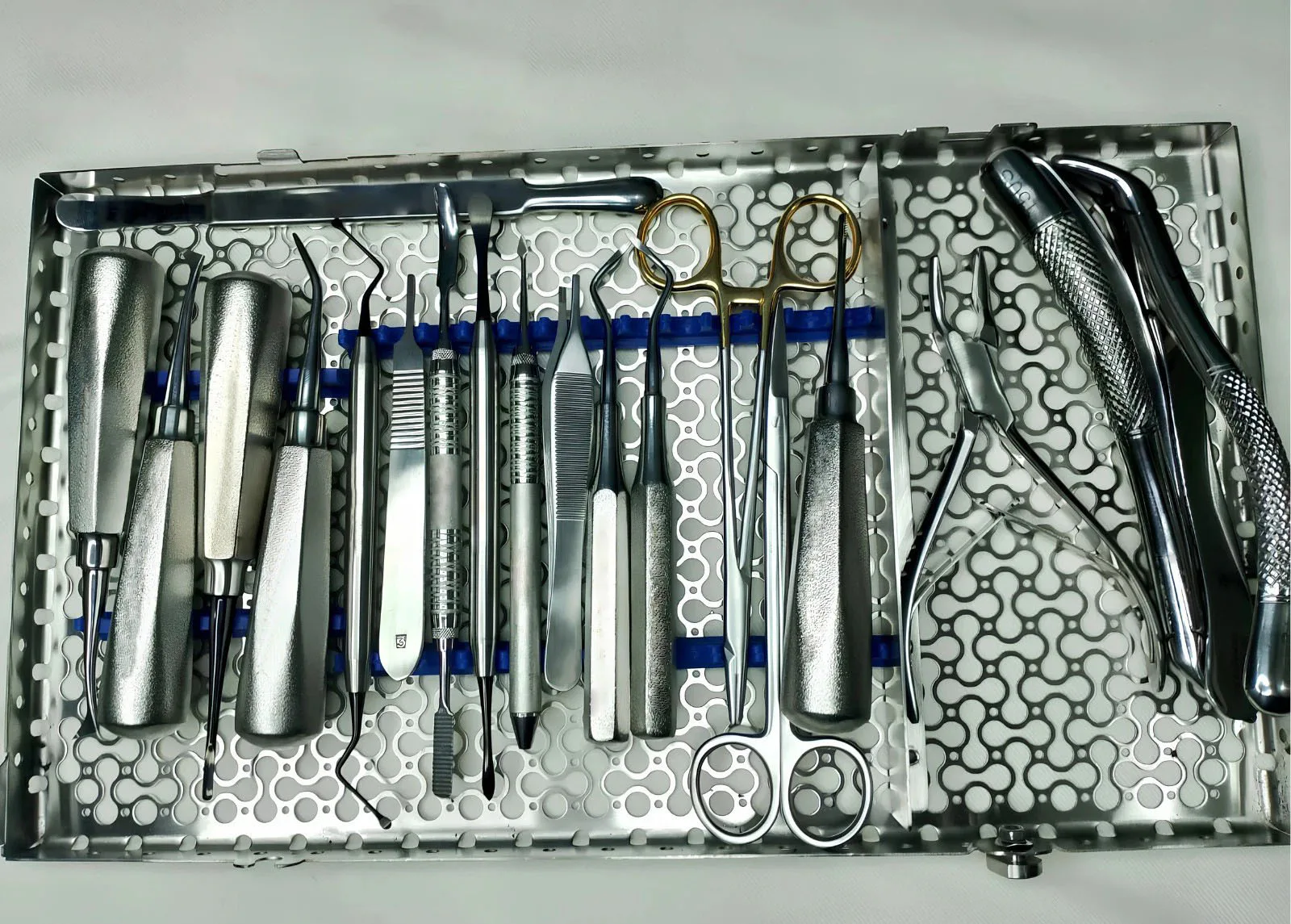
- Surgery: forceps, elevators, and tissue and closure instruments, matched to the named patterns and sizes on the list.
- Complete school-list kit: a combination of the groups your course requires. "Complete" means complete against your list; it has no fixed piece count.
One course might need only an examination assortment; another might combine examination, restorative and periodontal lines in one kit.
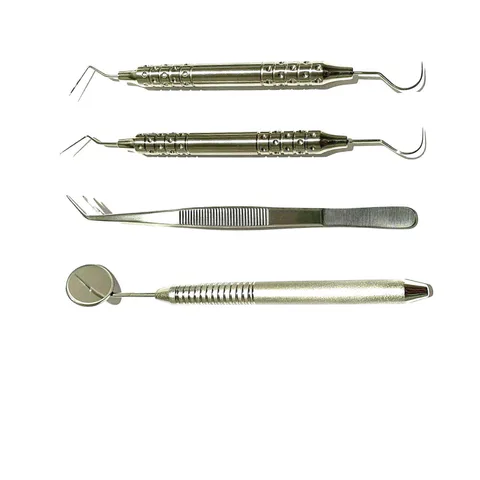
Example configuration: a four-instrument examination assortment
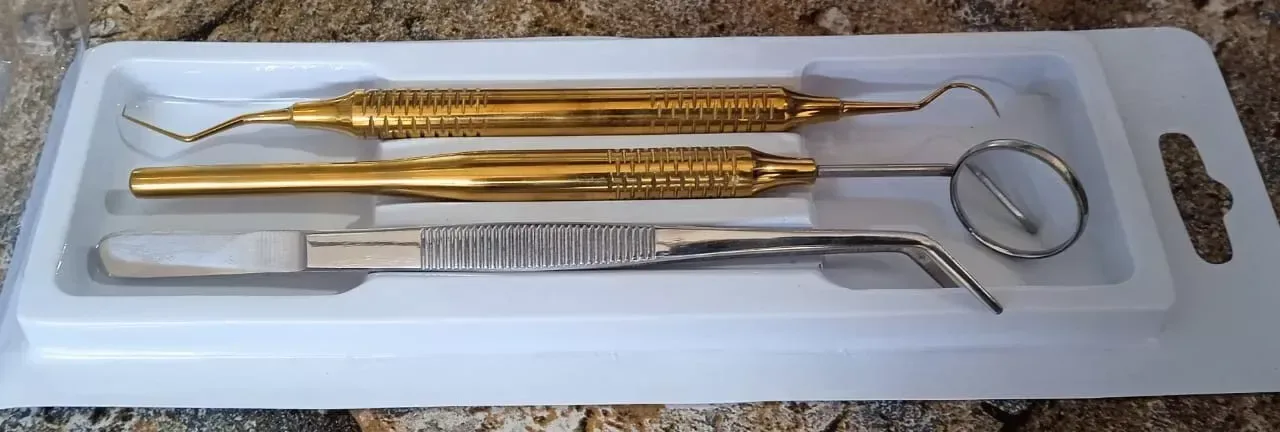
Here is one example of a small examination assortment:
- Mouth mirror, assembled on its handle: 1
- Angled cotton tweezers: 1
- Explorer/probe combinations, double-ended: 2
Each explorer/probe combination has an explorer at one end and a probe at the other on a single handle, so it counts as one instrument. The assembled mirror also counts as one. That makes four instruments in all. Other kits can count the same tasks differently: a list that asks for separate mirror heads and handles, or a separate explorer and probe, will have more pieces. So two examination kits with the same functions can have different piece counts, and it helps when each line on your list states its unit: complete assembly, head, handle or double-ended instrument.
This is an example configuration, not the contents of every kit.
Matching each line on your list
The details that decide whether a kit matches your list are the instrument's named pattern and, where the list gives one, its scale, figure, size or connection. For example, a periodontal probe named with a particular scale should be supplied with that scale, and a carver listed by its working-end pattern should be supplied in that pattern. A single-ended instrument and a double-ended combination are not interchangeable just because they do similar work. Keeping the list's own wording and references for every line makes the match accurate, and it also makes a later replacement request easy to describe.
Quantities for a class
Quantities work per line. Multiply the number of each instrument one student needs by the number of students, and add any spares as a separate quantity. For example, two of an instrument for each of 24 students is 48 of that line.
Requesting your kits
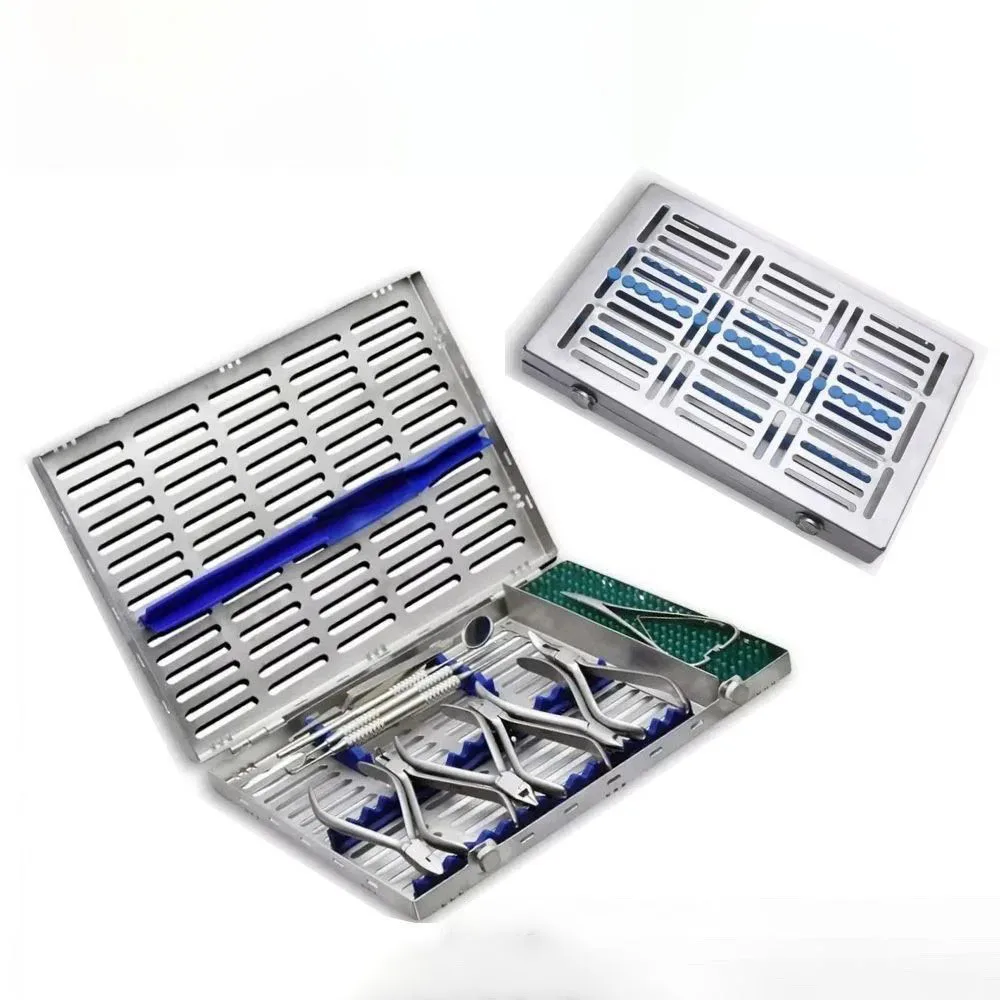
Send us your current school or course list, the course and term, the number of students or kits and the delivery destination. If you also want organizers or identification marking, list them separately from the instruments. We quote against the agreed list, so contents and quantities are set by your requirements rather than a fixed package price.
For supply to a whole school or cohort, see our dental student instrument kit program. For combination instruments on their own, see our explorer and probe combinations.