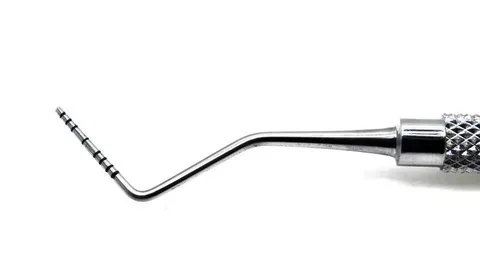
About Williams Periodontal Probe
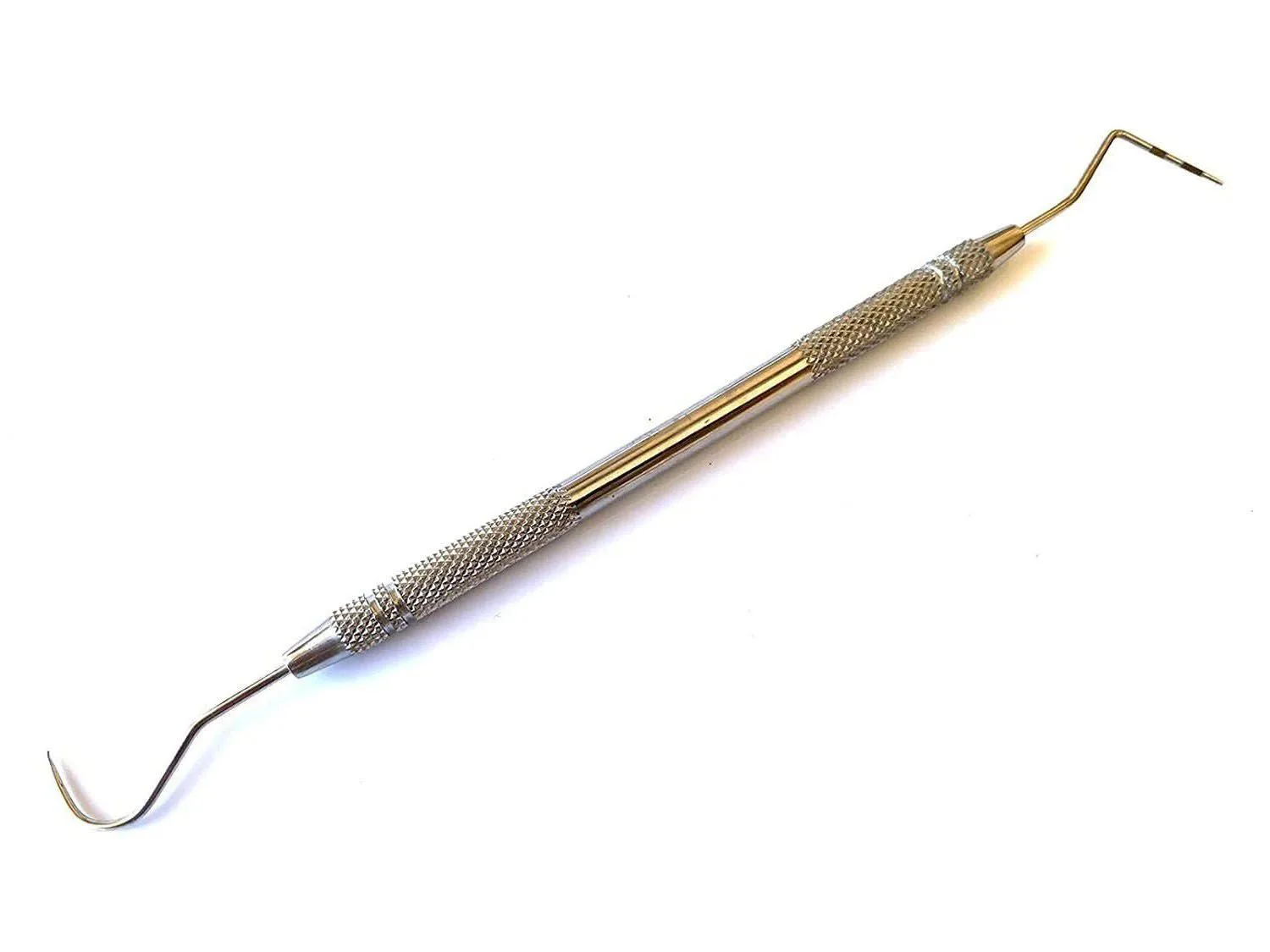
The Williams periodontal probe is a single-ended, graduated hand instrument for periodontal measurement and charting. It carries the Williams marking pattern, with color-coded reference marks along its working tip, and it has one working end rather than two.
The Williams marking sequence
The Williams scale marks these positions, in millimeters:
- 1, 2, 3, 5, 7, 8, 9 and 10 mm
The intervals are not all one millimeter. The marks run 1, 2 and 3 mm, then 5 mm, then 7, 8, 9 and 10 mm. There are no marks at 4 mm or 6 mm; that is a feature of the Williams convention, not a missing graduation. The highest marked reference is 10 mm. The color coding makes the reference bands easy to tell apart along the tip.
If your course, clinic or tray list specifies a Williams probe, it expects exactly this pattern of marks.
One working end, angled shank
The instrument has a single slender, graduated working tip on an angled shank, with a textured grip on the handle. "Single-ended" and "Williams" describe two separate things: the first is how many working tips the instrument has, the second is the marking scheme on the tip. When you specify a probe, give both.
Williams, continuous-scale probes and explorer combinations
Periodontal probes are not interchangeable just because they measure in millimeters:
- Williams probe: the marked sequence above, with gaps at 4 and 6 mm.
- Continuous-scale probe: a mark at every millimeter along its length, so it reads differently from a Williams scale.
- Explorer/probe combination: two working ends on one instrument, an explorer at one end and a probe at the other.
An explorer on its own is a tactile examination instrument with no measurement scale, so it is not a substitute for a graduated probe. For two-ended instruments, see our explorer and probe combinations. Our guide to periodontal probe types and markings compares the common scales in more detail.
Ordering
Request a quote for the single-ended Williams periodontal probe and tell us how many you need.