About Atraumatic Beak-and-Bumper Extraction Forceps
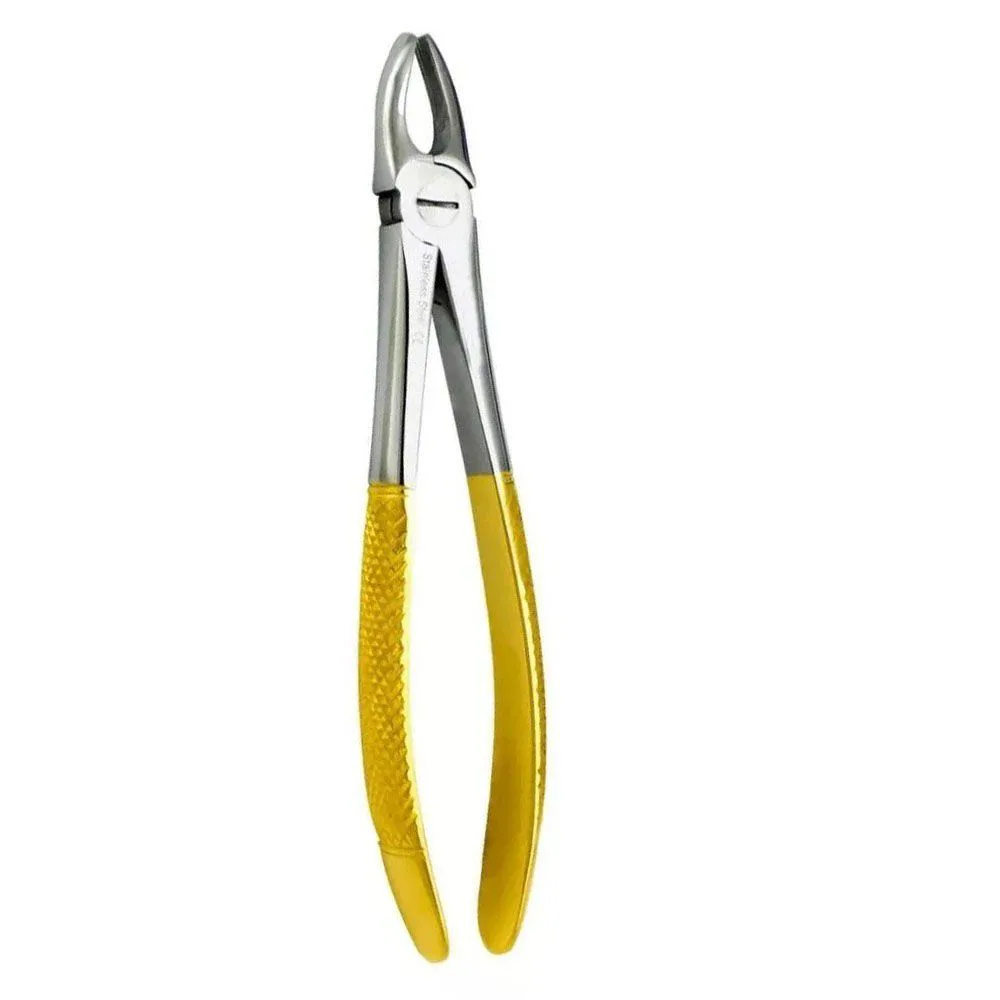
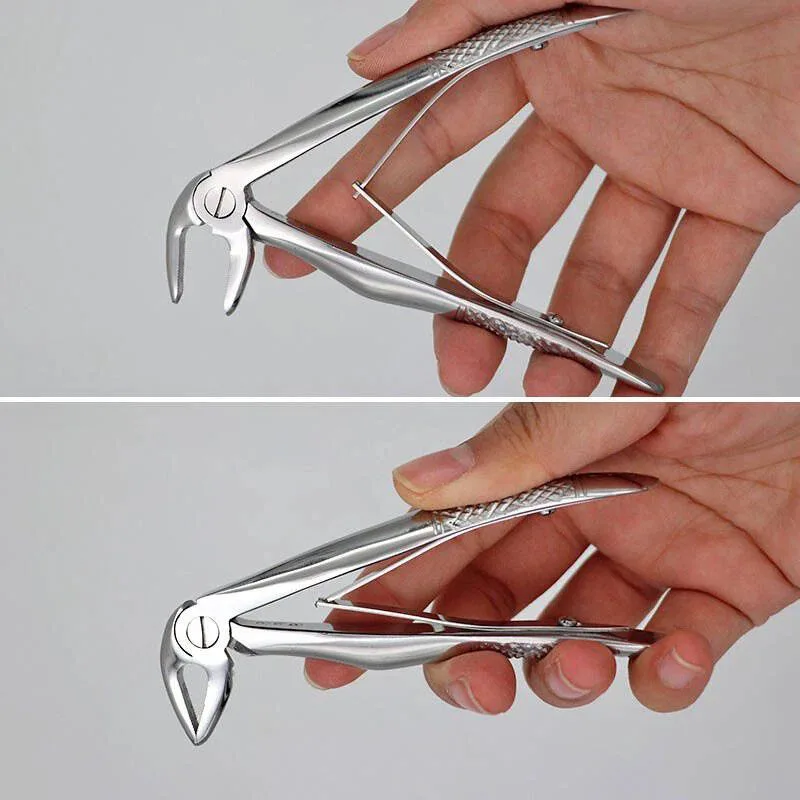
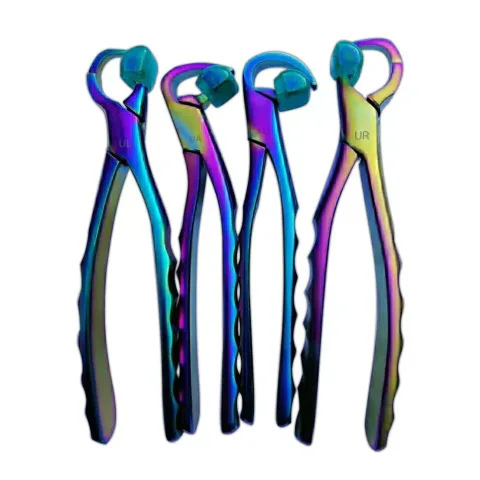
Beak-and-bumper forceps work differently from conventional extraction forceps. One side is a single beak that sits on the lingual or palatal side of the tooth; the other side is a bumper that rests on the gum and bone on the cheek side. The bumper acts as a fulcrum, so the tooth is levered out with a slow, steady wrist movement rather than squeezed and pulled. We make this design in four patterns with colour-coded handles.
The four patterns
- Upper anterior: for upper incisors, canines and premolars.
- Upper right and upper left: for upper molars on each side.
- Lower universal: for lower teeth.
The four-pattern set includes all four, one of each. Each pattern has its own handle colour, so the right instrument is quick to find on the tray.
Bumpers
The bumper is the part that rests on the tissue. Tell us your pattern when you enquire about replacement bumpers and we confirm what is available for it.
Our own design
These are our own unbranded beak-and-bumper forceps. We do not claim any affiliation with, or equivalence to, another manufacturer's product. Compare the specification and a sample directly.
Ordering
- Order single patterns or the four-pattern set.
- Evaluation samples of 1–3 pieces per pattern are available to check the beak, bumper seating and handle.
Care
Check the beak, bumper and joint after each use. Follow the supplied processing instructions and your facility's validated protocol.
For conventional forceps, see our English pattern extraction forceps; to loosen teeth first, see our luxating elevator set.